2028 Toyota Fortuner : Price, Specs & Performance
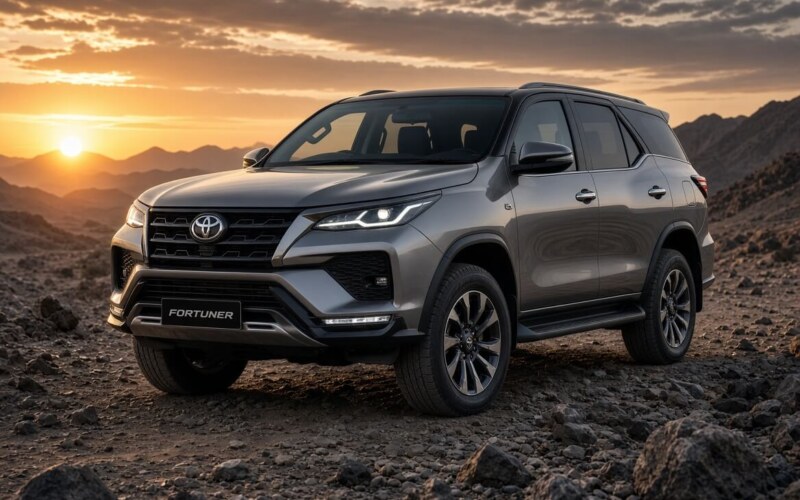
2028 Toyota Fortuner coverage arrives at a genuinely exciting moment for this popular body-on-frame SUV. Toyota is currently rolling out an all-new generation that represents the biggest overhaul this nameplate has received in roughly a decade. It’s worth noting upfront that the Fortuner isn’t sold in the United States. Instead, it remains one of Toyota’s most important models across India, Southeast Asia, the Middle East, and other global markets. With the new generation expected to reach international showrooms through late 2026 and into 2027, the 2028 Toyota Fortuner represents this reinvented SUV in its first full, settled model year on sale. This look at the 2028 Toyota Fortuner covers what’s confirmed so far, along with what remains reasonable, well-sourced expectation rather than official fact.

2028 Toyota Fortuner Overview
The 2028 Toyota Fortuner would represent the fourth generation of this globally important SUV. The current model first launched back in 2015 and has spent roughly a decade on sale with only incremental updates. Toyota has been testing camouflaged prototypes extensively throughout 2026, with a global debut expected by the end of that year. Regional launches, including India, are expected to follow through early 2027. That means the 2028 model year would arrive as this redesigned generation’s first fully settled year in showrooms worldwide.
Anyone researching the 2028 Toyota Fortuner should understand that Toyota hadn’t issued a complete official reveal at the time of writing. Many specific details discussed here come from spy shots and industry reporting, along with Toyota’s own confirmed platform strategy, rather than a finalized press release. What’s already clear is that this redesign addresses two of the outgoing Fortuner’s most persistent criticisms: a dated interior and a notable lack of modern driver-assistance technology. For a closer look at how another rugged, off-road-focused vehicle recently handled a similar generational leap, see our 2026 Chevrolet Colorado ZR2 Review.
2028 Toyota Fortuner Expected Price
Official pricing for the 2028 Toyota Fortuner hadn’t been announced at the time of writing. Toyota typically confirms market-specific pricing much closer to each region’s individual launch date, rather than committing to global figures early. Given that the new generation brings a genuinely upgraded platform, more advanced technology, and expanded safety equipment, buyers across Fortuner’s core markets should reasonably expect a moderate price increase over the outgoing model. That’s consistent with how Toyota has historically approached major redesigns of this nameplate, rather than a dramatic repricing.
Pricing will also vary considerably by region, given how differently the Fortuner is positioned across markets like India, Thailand, and the Middle East. Buyers using coverage of the 2028 Toyota Fortuner to budget a purchase should wait for official, market-specific pricing announcements as each region’s individual launch date approaches, rather than relying on early estimates.
2028 Toyota Fortuner Release Date
The redesigned Fortuner that would underpin the 2028 model year is expected to make its global debut by the end of 2026. That timeline is based on extensive prototype testing already spotted overseas throughout the year. Individual market launches, including India, are expected to follow in late 2026 or early 2027. As a result, the 2028 Toyota Fortuner would represent this new generation well into its first full year of worldwide availability, with most major markets having already received the redesigned SUV by that point.
2028 Toyota Fortuner Engine and Performance
The 2028 Toyota Fortuner is expected to continue offering Toyota’s familiar 2.8-liter four-cylinder turbo-diesel engine. This unit has proven popular and durable across the current generation, and it’s now expected to gain an integrated starter-generator for 48-volt mild-hybrid assistance. That electrification would bring improved efficiency and smoother stop-start operation, all without abandoning the diesel power that’s remained central to the Fortuner’s appeal in many of its core markets.
Beyond the mild-hybrid diesel, some industry reporting suggests Toyota could eventually introduce a stronger hybrid option for the redesigned Fortuner. This would build on the automaker’s broader global push toward electrification, detailed further on Toyota’s official global newsroom. Petrol engine options are also expected to carry over in relevant markets, giving the 2028 Toyota Fortuner a genuinely broad powertrain spread once the full lineup is confirmed.
2028 Toyota Fortuner Platform Change
Perhaps the most significant underlying change for the 2028 Toyota Fortuner is the expected move to Toyota’s TNGA-F ladder-frame platform. This is the same modern architecture that already underpins the latest global Hilux pickup and several of Toyota’s larger SUVs. Despite this platform upgrade, Toyota is expected to retain genuine body-on-frame construction and the rugged off-road character that’s made the Fortuner such a trusted choice in markets where durability and capability matter as much as comfort.
2028 Toyota Fortuner Horsepower and Acceleration
Specific horsepower and torque figures for the 2028 Toyota Fortuner’s updated engine lineup hadn’t been confirmed by Toyota at the time of writing. Given that the familiar 2.8-liter turbo-diesel is expected to gain mild-hybrid assistance rather than being replaced outright, buyers should reasonably expect modest gains in both power delivery and low-end responsiveness compared to the outgoing engine. A dramatic transformation in outright acceleration seems unlikely, however, since Toyota tends to prioritize reliability over raw performance with this nameplate.
Full performance figures will only become clear once Toyota completes its official global reveal and independent reviewers get behind the wheel, likely sometime around the vehicle’s late-2026 international debut.
2028 Toyota Fortuner Fuel Consumption
Official fuel economy figures for the 2028 Toyota Fortuner haven’t been published. That said, the expected addition of 48-volt mild-hybrid assistance to the familiar diesel engine points toward meaningful efficiency gains over the current generation. Toyota has increasingly prioritized electrification across its global lineup, and a mild-hybrid Fortuner would be consistent with that broader strategy. Buyers should expect improved real-world fuel economy without sacrificing the diesel’s traditional strengths in towing and long-distance driving.
2028 Toyota Fortuner Driving Experience
Independent testing of the redesigned Fortuner hadn’t taken place at the time of writing, so real-world driving impressions remain unavailable. Still, the move to Toyota’s TNGA-F platform suggests genuine chassis improvements over the outgoing generation, given how well-regarded this architecture has been on the related Hilux. Toyota’s decision to retain body-on-frame construction signals a deliberate choice to preserve the Fortuner’s traditional towing capability and off-road durability, rather than softening the vehicle’s fundamental character in pursuit of a more car-like ride.
Design cues borrowed from the latest Hilux and the Toyota 4Runner sold in North America suggest the 2028 Toyota Fortuner should present a more upright, confident stance on the road. Expect a wider front end and more defined body lines than the outgoing generation offered.
2028 Toyota Fortuner Driver-Assistance Upgrade
One of the most significant practical improvements expected for the 2028 Toyota Fortuner is the addition of genuine Level 2 driver-assistance technology. This is an area where the outgoing generation has fallen noticeably behind competitors in markets like India. Alongside a 360-degree camera system, this upgrade should meaningfully close the gap between the Fortuner and more modern rivals that have offered advanced safety technology for several years already.
2028 Toyota Fortuner Exterior Design
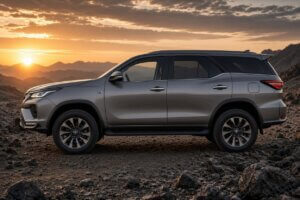
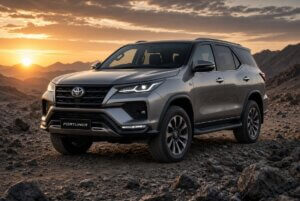
Spy shots and industry reporting point toward a considerably more aggressive, modern design for the 2028 Toyota Fortuner. Expect styling cues borrowed from both the latest-generation Hilux pickup and the North American Toyota 4Runner. Expected changes include a split headlamp setup, a larger front grille, a flatter bonnet, and a redesigned front bumper, giving the SUV a more upright and wider overall stance compared to the outgoing model.
At the rear, reports consistently point toward a full-width LED light bar connecting redesigned taillights. Bold Fortuner lettering is also expected to span the tailgate, creating a cleaner, more contemporary appearance. Toyota’s design team appears to be applying the same sharper, more angular design language already seen on several of the brand’s larger global SUVs.
2028 Toyota Fortuner Interior and Technology
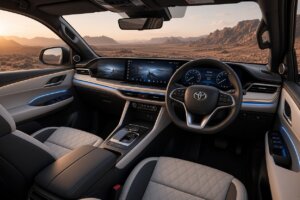
Inside, the 2028 Toyota Fortuner is expected to receive its most significant upgrade in years, directly addressing long-standing criticism of the outgoing model’s dated cabin. Reports point toward dual 12.3-inch displays spanning the dashboard, replacing the current generation’s smaller, less integrated infotainment setup. Genuinely upgraded materials and improved fit and finish are also expected throughout the cabin.
Additional expected equipment includes wireless smartphone charging, ventilated and power-adjustable front seats, and an available sunroof, depending on trim level and market. Combined with the expected addition of Level 2 driver-assistance technology, these updates would represent a genuinely comprehensive modernization of the Fortuner’s cabin experience.
2028 Toyota Fortuner Safety Systems
The addition of Level 2 advanced driver-assistance systems represents the most significant safety improvement expected for the 2028 Toyota Fortuner. This directly addresses a feature gap that’s become increasingly noticeable as competitors in key markets like India have rolled out similar technology in recent years. A 360-degree camera system is also expected to join the equipment list, improving visibility and low-speed maneuverability in tight spaces.
Because the redesigned Fortuner hadn’t completed independent crash testing at the time of writing, specific safety ratings remain unavailable. Buyers wanting updated information as testing becomes available can consult ASEAN NCAP, which regularly evaluates SUVs sold across the Fortuner’s core Southeast Asian markets.
2028 Toyota Fortuner Pros and Cons
What We Expect to Like About the 2028 Toyota Fortuner
✓ Long-overdue Level 2 driver-assistance technology
✓ Modernized cabin with dual 12.3-inch displays
✓ Proven diesel engine gaining mild-hybrid efficiency
✓ Genuine body-on-frame construction retained
✓ Bolder, more contemporary exterior design
What Remains Uncertain About the 2028 Toyota Fortuner
✗ Official specifications and pricing hadn’t been confirmed at writing
✗ Not sold in the United States market
✗ Exact horsepower figures for updated engines remain unknown
✗ Independent crash-test data isn’t yet available
2028 Toyota Fortuner Main Competitors
Across its core global markets, the 2028 Toyota Fortuner is expected to continue competing directly against body-on-frame SUVs like the Ford Everest, Mitsubishi Pajero Sport, and Isuzu MU-X. All three share a similar rugged, truck-based approach to the midsize SUV segment. The Mitsubishi Pajero itself is also reportedly returning to several markets with a new platform and diesel options, adding further competitive pressure in the segment.
Against this field, the 2028 Toyota Fortuner will need its expected technology and interior upgrades to genuinely close the gap that’s opened up against rivals in recent years. At the same time, it will keep leaning on Toyota’s traditional strengths in reliability and resale value that have long defined the nameplate’s appeal. Buyers weighing similarly capable off-roaders closer to home may also want to compare notes with our 2027 Chevrolet Silverado 1500 Review, which covers another vehicle built around genuine truck-based durability.
2028 Toyota Fortuner Final Verdict
Based on everything reported so far, the 2028 Toyota Fortuner looks poised to deliver the most significant generational leap this nameplate has seen in nearly a decade. The combination of a modern TNGA-F platform, genuinely upgraded technology, and long-overdue driver-assistance features suggests Toyota is taking this redesign seriously, rather than treating it as a simple styling refresh.
Plenty of specific details remain unconfirmed, including exact pricing, horsepower figures, and independent safety ratings. All of that should become clearer as the vehicle’s global rollout continues through late 2026 and into 2027. Still, anyone following coverage of the 2028 Toyota Fortuner will find a genuinely promising redesign. It appears ready to address the outgoing model’s biggest shortcomings while preserving the rugged, dependable character that’s made it a trusted choice across so many international markets.
2028 Toyota Fortuner Images
Specifications
Specifications
| Production year | 2028 |
| Body type & seats | Mid-Size SUV, 7 Seats |
| Dimensions | 4,800 × 1,870 × 1,850 mm (estimated) |
| Weight | 2,050–2,250 kg (estimated) |
| Engine type | Turbocharged Diesel / Turbocharged Petrol |
| Engine size & cylinders | 2.8L I4 Diesel / 2.7L I4 Petrol |
| Aspiration | Turbocharged / Naturally Aspirated |
| Power | 201–220 hp (expected) |
| Torque | 400–550 Nm (expected) |
| Transmission | 6-Speed Automatic / 6-Speed Manual |
| Drivetrain | RWD / 4WD |
| Acceleration (0-100 km/h) | 9.0–11.0 sec (estimated) |
| Top speed | 180–195 km/h (estimated) |
| Fuel type | Diesel / Gasoline |
| Fuel consumption | 7.5–9.5 L/100 km (estimated) |
| Fuel tank capacity | 80 L |
| Brakes | Ventilated Disc Brakes, ABS, EBD |
| Steering | Electric Power Steering |
| Infotainment | 12.3-inch Touchscreen, 12.3-inch Digital Instrument Display |
| Connectivity | Apple CarPlay, Android Auto, Bluetooth, USB-C, Wireless Charging, Toyota Connected Services |
| Safety | Toyota Safety Sense, Automatic Emergency Braking, Adaptive Cruise Control, Lane Departure Alert, Blind Spot Monitor, Rear Cross Traffic Alert, 360° Camera, Parking Sensors, Multiple Airbags, TPMS |
2028 Toyota Fortuner Price
 Price in USD
|
40,000 USD |
 Price in European Union
|
34,000 EUR |
 Price in United Kingdom
|
29,600 GBP |
 Price in Australia
|
61,200 AUD |
 Price in Canada
|
55,200 CAD |
 Price in India
|
3,492,000 INR |
 Price in China
|
287,200 CNY |
 Price in Indonesia
|
648,000,000 IDR |
 Price in Philippines
|
2,280,000 PHP |
 Price in Malaysia
|
168,800 MYR |
 Price in Nigeria
|
61,400,000 NGN |
 Price in Russia
|
3,218,400 RUB |
 Price in Pakistan
|
11,320,000 PKR |
 Price in Saudi Arabia
|
150,000 SAR |
 Price in Japan
|
5,880,000 JPY |
 Price in South Africa
|
705,600 ZAR |
 Price in Brazil
|
217,200 BRL |
 Price in Bangladesh
|
4,840,000 BDT |
 Price in Mexico
|
750,800 MXN |
More Products from Toyota