2027 Toyota HiAce: Price, Engine, Specs, and Features
2027 Toyota HiAce is set to be the most significant update in the nameplate’s 58-year history. After more than two decades on the same cab-over platform in Japan, Toyota is finally replacing the H200 generation with an all-new seventh-generation model. It moves to the TNGA platform, drops the cab-over layout, introduces a self-charging hybrid powertrain for the first time ever, and previews a design language shown at the 2025 Japan Mobility Show. The 2027 HiAce will also unify Toyota’s van lineup globally — bringing Japanese buyers into the modern era that the rest of the world has enjoyed since the H300 launched in 2019.
2027 Toyota HiAce Overview: The End of a 22-Year Era
The Toyota HiAce has been in continuous production since October 1967 — longer than any other Toyota nameplate. It has served taxi fleets, delivery operators, airport shuttles, camper converters, and remote communities across more than 150 countries. Its reputation for reliability is not marketing. It is documented across millions of high-mileage vehicles still working daily in Asia, Africa, the Middle East, and Australia.
In Japan, the H200 generation has been on sale since 2004 — a remarkable 22-year run sustained by incremental updates and owner loyalty. Meanwhile, the rest of the world moved on to the H300 generation in 2019. That gap between what Japanese buyers received and what international markets got became increasingly difficult to ignore.
The 2027 Toyota HiAce closes that gap permanently. According to Carscoops, the new generation “will switch to the TNGA platform and drop its long-used cab-over layout” — the most significant architectural change in the HiAce’s history. Multiple body styles are expected, along with the first-ever hybrid powertrain for any HiAce model.
2027 Toyota HiAce Release Date and Market Rollout
The seventh-generation 2027 Toyota HiAce is expected to make its world debut in late 2026 or early 2027 in Japan. Wikipedia confirms the launch is “set for 2027,” aligning with industry reports from Best Car and Creative Trend citing Japanese agency Apollo News Service.
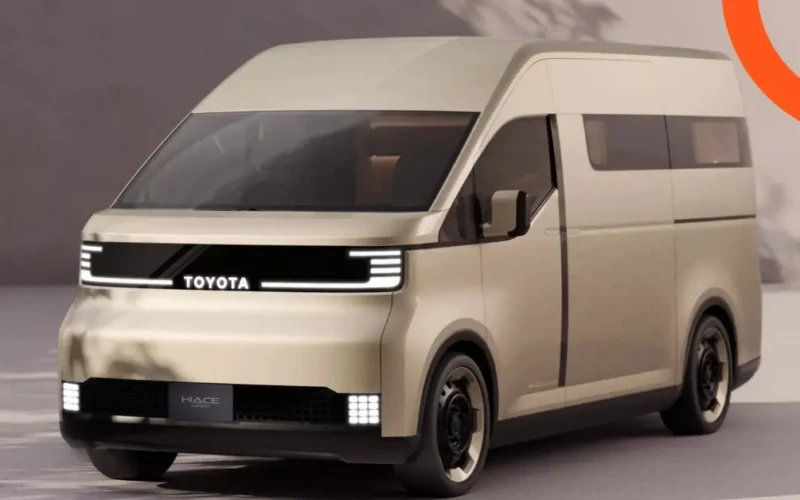
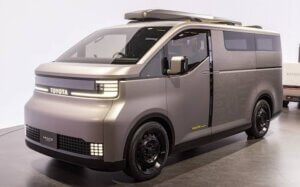
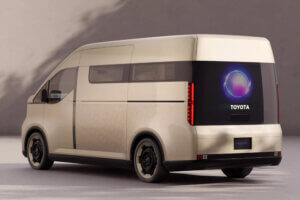
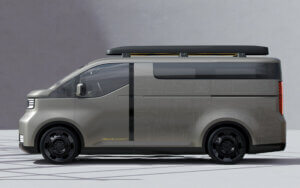
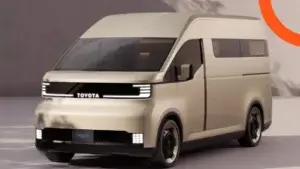
The two concept vehicles shown at the 2025 Japan Mobility Show are the clearest preview of the production model. One features a long-wheelbase, high-roof van configuration. The other is a standard van. Both carry clean, modern LED design inspired by Toyota’s 2023 Kayoibako concept. Toyota’s established practice of showing near-production commercial vehicle concepts shortly before launch makes these concepts highly relevant to what buyers will actually see in showrooms.
Global markets including Australia, the Philippines, Thailand, the Middle East, and parts of Africa and Latin America are expected to receive the seventh-generation HiAce following the Japan debut. An all-electric version was reportedly considered but has been put on hold. A hydrogen fuel cell variant remains a longer-term possibility beyond 2027.
2027 Toyota HiAce Price
Toyota has not officially confirmed pricing for the seventh-generation 2027 Toyota HiAce at time of writing. The current sixth-generation H300 HiAce in Australia starts from $54,630 before on-road costs for the LWB Van with barn doors — a figure that CarExpert noted represents about $3,000 more than the previous year’s equivalent model.
For the new generation, a meaningful price increase over the current H300 is expected. The addition of the TNGA platform, hybrid technology, updated safety systems, and a new interior architecture all carry real engineering costs. Industry analysts project the seventh-generation HiAce will start from approximately AUD $58,000–$62,000 in Australia depending on body style and powertrain — with hybrid variants expected to command a further premium of $4,000–$7,000 over equivalent diesel models.
In Middle Eastern markets, the HiAce’s pricing has historically tracked closely to Australian figures in USD equivalent terms. Expect a starting price in the $38,000–$45,000 range depending on market and specification once official pricing is released.
2027 Toyota HiAce Engine and Performance
2027 Toyota HiAce Diesel: Carrying Forward the 2.8L
The current sixth-generation HiAce H300 uses Toyota’s proven 2.8-litre turbocharged diesel four-cylinder — the same 1GD-FTV engine found in the Land Cruiser Prado and Fortuner. In HiAce application, it produces 120kW and 420Nm of torque, paired with a six-speed automatic transmission. CarSales confirms the 2026 H300 returns 7.4 to 8.1L/100km combined.
The seventh-generation 2027 Toyota HiAce is expected to carry forward this engine family in updated form. Industry reports suggest the diesel will be tuned for improved emissions compliance and potentially slightly improved fuel economy. A mild-hybrid system paired with the diesel is also under consideration for markets with stricter emissions requirements — similar to the approach taken with the 2026 Hilux.
2027 Toyota HiAce Hybrid: A Historic First
The most significant powertrain news for the 2027 Toyota HiAce is the confirmed arrival of a self-charging hybrid system — the first in the nameplate’s 58-year history. Wikipedia confirms the seventh generation “will be the first HiAce generation to offer alternative fuel options such as hybrid-energy and hydrogen power.”
The hybrid system is expected to pair a petrol engine with Toyota’s proven self-charging hybrid technology — similar in principle to the system used in the Corolla and RAV4 hybrids. It will charge through regenerative braking and engine operation, with no plug-in requirement. This makes it practical for fleet operators and commercial buyers who lack charging infrastructure — Toyota’s primary HiAce audience.
The AutoHit report notes a fully electric version “has been put on hold” — a pragmatic decision that reflects the HiAce’s role in markets where charging infrastructure remains limited. The hybrid option is positioned as the efficiency upgrade for operators who need lower running costs without compromising operational flexibility.
2027 Toyota HiAce Towing and Payload
The current sixth-generation HiAce H300 has a braked towing capacity of 1,900kg and an unbraked capacity of 400kg. CarSales confirms cargo hold volume of 6.2 cubic metres in the LWB Van — one of the largest in its class. The seventh-generation model is expected to maintain or improve on these figures, given its move to the more rigid TNGA platform.
The TNGA platform’s improved structural rigidity — a well-documented advantage of Toyota’s modern architecture — should deliver better torsional stiffness than the H200’s aging platform. That translates to better load-carrying composure, reduced fatigue on long runs, and improved overall durability under commercial use conditions.
2027 Toyota HiAce Fuel Consumption
The current diesel H300 HiAce returns 7.4 to 8.1L/100km combined in CarSales testing — competitive for a rear-wheel-drive van of this payload capacity. The seventh-generation diesel is expected to match or modestly improve on these figures through engine refinements and the TNGA platform’s weight and aerodynamic improvements.
The hybrid variant is where the efficiency story becomes more compelling. Toyota’s self-charging hybrid systems consistently deliver 15–25% better fuel economy than equivalent combustion-only powertrains in mixed driving conditions. For a fleet operator running a HiAce 150,000km per year, that efficiency difference translates to significant real-world savings — exactly the kind of argument that makes the hybrid commercially attractive without requiring upfront investment in charging infrastructure.
Battery and Hybrid Details for the 2027 Toyota HiAce
Full technical specifications for the 2027 Toyota HiAce hybrid system have not been officially published. Based on Toyota’s established hybrid architecture, the system is expected to use a nickel-metal hydride or lithium-ion battery pack integrated with the powertrain — the same approach used in the Corolla and Yaris hybrids, scaled for commercial van application.
There will be no plug-in capability and no pure electric driving range. The battery exists solely to recover braking energy, assist acceleration, and enable the engine to shut down at idle or low speeds. For urban delivery operators, this stop-start efficiency is especially valuable — city driving in traffic is where self-charging hybrids deliver the greatest fuel savings over diesel-only powertrains.
Driving the 2027 Toyota HiAce
The sixth-generation H300 HiAce established a strong benchmark for how a modern commercial van should drive. CarExpert’s 2026 review noted it is “relatively comfortable” up front, with good driving position ergonomics and a logical, work-focused interior layout. The seats are well-cushioned. Everything is within easy reach. The gearbox — a six-speed automatic — is smooth and predictable.
The seventh-generation 2027 Toyota HiAce is expected to build on these qualities with the TNGA platform’s significantly improved structural rigidity. TNGA-based vehicles consistently deliver better body control, reduced NVH (noise, vibration, harshness), and more precise steering responses than the platforms they replace. For a van driven by professionals covering hundreds of kilometers per day, those refinements matter considerably.
The move away from cab-over layout — which places the engine under the cabin floor — to a front-engined design is the most fundamental handling change. Front-engined vans are generally quieter, easier to service, and better on long-distance runs. Toyota’s decision to use a shorter hood than the H300 preserves urban maneuverability in tight Japanese streets while gaining the comfort advantages of a conventional front-engine layout.
The HiAce has never been praised for sporty driving dynamics and the seventh generation will not change that. What it will deliver is a more refined, quieter, and less fatiguing drive for operators who spend their working lives behind the wheel — and that is exactly the improvement its users have been waiting two decades for.
2027 Toyota HiAce Exterior Design
The design direction for the 2027 Toyota HiAce comes from the two concepts shown at the 2025 Japan Mobility Show. Both carry clean, modern LED lighting signatures and flat, functional surfaces inspired by Toyota’s 2023 Kayoibako concept. The overall aesthetic is purposeful without being aggressive — modern commercial vehicle design that communicates capability rather than personality.
Carscoops’ exclusive rendering previews the production-spec HiAce as a white commercial van with a high roof and long wheelbase on black steel wheels — a working vehicle that looks exactly like a working vehicle should. The narrow side windows of the concepts may be simplified for cost reasons on the production model, while the lighting units may adopt simpler LED graphics.
Multiple body styles are expected at launch — consistent with the current HiAce range, which offers different widths, heights, and lengths to serve cargo, passenger, and specialist conversion needs. A smaller urban delivery van based on the Daihatsu Kayoibako-K concept is also expected to join the lineup, targeting last-mile delivery operators with a more compact option alongside the full-size HiAce.
2027 Toyota HiAce Interior and Technology
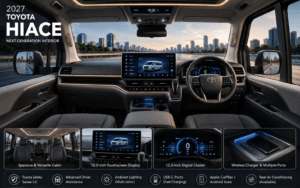
The current sixth-generation HiAce received a meaningful interior upgrade for 2026 — a 7.0-inch digital instrument cluster, wireless Apple CarPlay and Android Auto, and adaptive cruise control. CarExpert called the instrument cluster “a vast upgrade over the old, primarily analogue setup” and noted the wireless CarPlay worked without issues during their test week.
The seventh-generation 2027 Toyota HiAce is expected to take that technology step further. Based on the concepts shown at the 2025 Japan Mobility Show, the new interior will feature a more modern dashboard layout with a larger digital instrument cluster and a touchscreen infotainment system that aligns with Toyota’s current passenger car standards. Physical controls for climate and frequently used functions are expected to remain — commercial operators value tactile controls they can operate without looking away from the road.
The cargo hold of the current H300 HiAce is 6.2 cubic metres in the LWB Van — CarExpert described it as “colossal.” The seventh generation is expected to maintain similar cargo volumes while improving access and tie-down hardware. Passenger shuttle variants will offer configurable seating for up to 12 or more occupants depending on body length. Both the van and commuter variants are expected from launch, with specialist conversions following as the aftermarket adapts to the new platform.
2027 Toyota HiAce Safety Systems
The sixth-generation 2026 HiAce already carries a five-star ANCAP safety rating — one of the strongest scores earned by a commercial van in this category. It comes standard with Toyota Safety Sense including pre-collision warning, autonomous emergency braking, lane departure alert, adaptive cruise control, and road sign recognition.
The seventh-generation 2027 Toyota HiAce is expected to carry Toyota Safety Sense in its latest form — adding cyclist detection at night, intersection support, and Emergency Driving Stop capability. Over-the-air (OTA) software updates for safety systems are also expected, allowing Toyota to improve the HiAce’s safety technology throughout its life without requiring a dealer visit.
The TNGA platform’s improved passive safety credentials are also significant. TNGA structures consistently score better in pole impact and small overlap crash tests than the H-Series platform they replace — a genuine benefit for drivers and passengers in a vehicle used commercially at high annual mileages. Toyota covers the current HiAce in Australia with a five-year unlimited-kilometre warranty. The seventh generation is expected to maintain or improve on that coverage.
2027 Toyota HiAce Pros and Cons
| ✅ Pros | ❌ Cons |
|---|---|
| First-ever HiAce hybrid — self-charging system targets significantly better fuel economy | No plug-in or full electric option at launch — BEV version put on hold |
| TNGA platform — more rigid, safer, and more refined than 22-year-old H200 architecture | Official specs, pricing, and full trim details not yet confirmed at time of writing |
| Modern front-engine layout — quieter, easier to service, more comfortable on long runs | Price increase expected — TNGA, hybrid tech, and updated safety all add cost |
| Updated Toyota Safety Sense with OTA updates — improves throughout vehicle life | Not available in the United States as a new vehicle — grey import only |
| Multiple body styles expected — van, high-roof, commuter, and long wheelbase | Debut timing (late 2026/early 2027) still unconfirmed by Toyota officially |
| 58-year reliability legacy continues on a modern platform — best of both worlds | Aftermarket accessories and conversions will need time to adapt to new platform |
2027 Toyota HiAce vs The Competition
The 2027 Toyota HiAce competes in the global light commercial van segment — a market that has become increasingly competitive as rivals modernize their offerings. The Ford Transit is the benchmark in many markets for its breadth of body styles, available AWD, and broad powertrain range including an electric Transit that has already launched globally. The Transit’s interior technology and cargo access have set the standard the HiAce has lagged behind in recent years. The seventh-generation HiAce’s TNGA platform and updated tech are Toyota’s direct answer to that challenge.
The Mercedes-Benz Sprinter occupies the premium end of the commercial van segment — more expensive, more technologically sophisticated, and more refined than the HiAce at any price point. But the Sprinter’s running costs, service intervals, and long-term reliability do not match the HiAce’s track record over high mileages in demanding conditions. For operators in Asia, Africa, the Middle East, and Australia where service networks and parts availability differ significantly from Europe, the HiAce’s lower total cost of ownership remains a compelling advantage.
The Hyundai Staria and Kia Carnival serve the people-mover end of the market where the HiAce Commuter competes — both offering more car-like cabins and smoother rides for passenger transport. But neither matches the HiAce’s cargo versatility or its acceptance among fleet operators who need a vehicle that can serve both passengers and freight duties with minimal configuration change. The Volkswagen Transporter and its T7 generation bring European refinement at a price premium that most commercial HiAce operators find difficult to justify over Toyota’s combination of reliability and value.
2027 Toyota HiAce Final Verdict
The 2027 Toyota HiAce is the most important new commercial vehicle Toyota will launch this decade. After 22 years on aging architecture, the H200 generation’s replacement brings the HiAce into genuine modernity — a TNGA platform, a front-engine layout, a self-charging hybrid powertrain, updated safety systems, and a new interior design. These are not incremental improvements. They are the changes that the HiAce’s millions of global operators have been waiting for.
The timing is right. Commercial van buyers face increasing pressure to reduce emissions. Urban operators deal with tightening low-emission zone requirements in cities around the world. The hybrid HiAce positions Toyota to serve those buyers without the infrastructure requirements of a fully electric vehicle — a pragmatic solution that reflects deep understanding of how commercial vans are actually used.
What will not change is the foundation that made the HiAce a global institution. The 2027 Toyota HiAce will still be the van that operators trust to start every morning, carry every load, and run past 300,000km with proper maintenance. It will just do all of those things on a better platform, with better technology, and with meaningfully lower running costs than the van it replaces. For commercial buyers around the world, that combination is exactly what the HiAce has always promised — and the seventh generation finally delivers it with the modern tools the job demands.
Specifications and platform details sourced from Carscoops, AutoHit, Wikipedia Toyota HiAce entry, CarExpert Australia, CarSales Australia, and Autocar Philippines. Seventh-generation HiAce specifications are based on confirmed platform and powertrain direction from industry reports and concept vehicle reveals. Final production specifications will be confirmed by Toyota at the official launch, expected late 2026 or early 2027. Current H300 pricing and specifications confirmed against CarExpert December 2025 review.
2027 Toyota HiAce Images
Specifications
Specifications
| Production year | 2027 |
| Body type & seats | Van / Passenger Van, 2–15 Seats (depending on configuration) |
| Dimensions | Length: 5,265 mm • Width: 1,950 mm • Height: 1,990 mm • Wheelbase: 3,210 mm |
| Weight | 2,050–2,350 kg |
| Engine type | Turbocharged Petrol Engine |
| Engine size & cylinders | 2.4-liter Inline-4 |
| Aspiration | Single Turbocharged |
| Power | 275 hp (205 kW) (expected) |
| Torque | 430 Nm (317 lb-ft) (expected) |
| Transmission | 8-Speed Automatic |
| Drivetrain | Rear-Wheel Drive (RWD) |
| Acceleration (0-100 km/h) | 9.8 sec (approx.) |
| Top speed | 180 km/h (approx.) |
| Fuel type | Regular Unleaded Gasoline |
| Fuel consumption | 10.5 L/100 km (combined) (estimated) |
| Fuel tank capacity | 70 Liters |
| Brakes | Ventilated Front Disc, Rear Disc, ABS, EBD, Brake Assist |
| Steering | Electric Power Steering (EPS) |
| Infotainment | 10.5-inch Touchscreen, Digital Instrument Cluster |
| Connectivity | Wireless Apple CarPlay, Android Auto, Bluetooth, USB-C, Wi-Fi Hotspot |
| Safety | Toyota Safety Sense 3.0, Pre-Collision System, Adaptive Cruise Control, Lane Departure Alert, Lane Tracing Assist, Blind Spot Monitor, Rear Cross Traffic Alert, Parking Sensors, 360° Camera, Automatic High Beams, Traffic Sign Recognition, Multiple Airbags, TPMS (expected). |
2027 Toyota HiAce Price
 Price in USD
|
55,000 USD |
 Price in European Union
|
46,750 EUR |
 Price in United Kingdom
|
40,700 GBP |
 Price in Australia
|
84,150 AUD |
 Price in Canada
|
75,900 CAD |
 Price in India
|
4,801,500 INR |
 Price in China
|
394,900 CNY |
 Price in Indonesia
|
891,000,000 IDR |
 Price in Philippines
|
3,135,000 PHP |
 Price in Malaysia
|
232,100 MYR |
 Price in Nigeria
|
84,425,000 NGN |
 Price in Russia
|
4,425,300 RUB |
 Price in Pakistan
|
15,565,000 PKR |
 Price in Saudi Arabia
|
206,250 SAR |
 Price in Japan
|
8,085,000 JPY |
 Price in South Africa
|
970,200 ZAR |
 Price in Brazil
|
298,650 BRL |
 Price in Bangladesh
|
6,655,000 BDT |
 Price in Mexico
|
1,032,350 MXN |
More Products from Toyota