
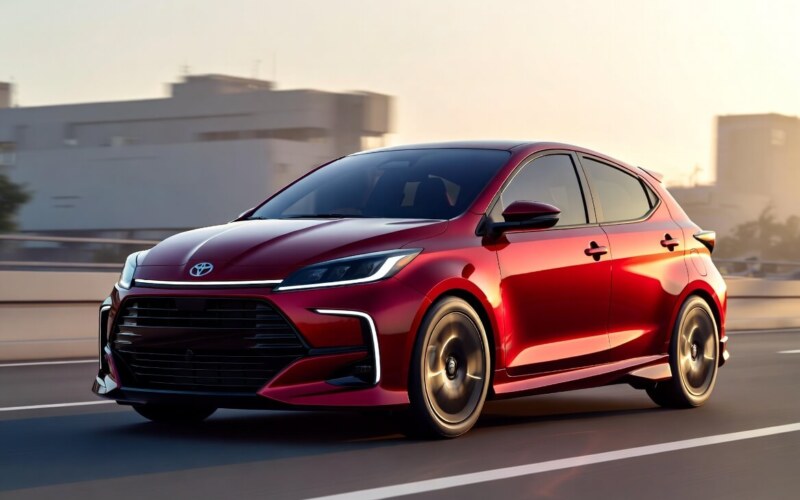
2027 Toyota Yaris is shaping up to be a pivotal player in the small car segment, not by reinventing the wheel, but by offering a choice that few can match. While the outgoing Yaris was already celebrated for its hybrid efficiency, the next generation, expected around 2027 or 2028, is taking a bold leap forward. For the first time, the Yaris will be offered with a choice of petrol, hybrid, and fully electric powertrains [citation:5]. This isn’t just an update; it’s a strategic move to offer a “multi-energy” solution on a single platform, mirroring the approach planned for the next-generation Corolla [citation:5]. Whether you’re an urban commuter looking for the ultimate efficiency or a driver wanting a zero-emission city car, the 2027 Toyota Yaris is being designed to have a configuration that fits your lifestyle. Let’s dive into what makes this new generation of Toyota’s iconic hatchback so intriguing.
Overview: A New Era of Choice
The 2027 Toyota Yaris represents a significant evolution for the model. It’s moving away from being just a “cheap car,” instead positioning itself as a more premium and technologically advanced offering [citation:1][citation:4][citation:8]. The core of this transformation is a new multi-energy platform, which allows for the integration of internal combustion, hybrid, and all-electric powertrains [citation:1][citation:5][citation:12].
This strategy is a direct response to a changing market, where customers in different regions have varying needs and preferences. By offering all options on one model line, Toyota aims to cater to a wider audience without creating separate, distinct nameplates [citation:5]. The 2027 Yaris is less about a single solution and more about providing the ultimate choice for the modern driver.
Price and Release Date: When and How Much?
For those eagerly waiting, the 2027 Toyota Yaris is expected to arrive in global markets around 2027, though some reports suggest it could be pushed to 2028 as Toyota extends product lifecycles [citation:1][citation:5][citation:7].
Pricing remains a key factor for any small car. Based on Australian market estimates for the hybrid version, prices are expected to start from around $28,990 for the base Ascent Sport Hybrid, climbing to $35,940 for the top-tier Zr Hybrid Two-Tone [citation:2]. While prices for the new electric variant have not been officially confirmed, it’s expected to be positioned competitively against upcoming small EVs like the Renault 5 and Volkswagen ID. Polo [citation:5]. The 2027 Toyota Yaris aims to offer a compelling value proposition for its class.
Engine and Performance: The Power of Choice
The 2027 Toyota Yaris is set to offer a trifecta of powertrain options, ensuring there’s a version for almost everyone.
Hybrid Powertrain: A Legacy of Efficiency
The hybrid version will continue the Yaris’s tradition of exceptional fuel economy. The current model achieves around 3.3L/100km, and the new generation is expected to maintain or even improve on that impressive figure [citation:5][citation:7]. This powertrain is expected to be a refined evolution of the current system, offering a smoother, more responsive, and quieter driving experience, especially in urban settings [citation:7].
Electric Powertrain: The Zero-Emission Pioneer
For the first time, a fully electric Toyota Yaris will join the lineup. This is the most significant development, bringing the beloved city car into the EV era. The electric Yaris is rumored to feature a battery pack of around 50 kWh, which is expected to deliver a driving range of over 400 kilometers (approximately 250 miles) on the WLTP cycle [citation:1][citation:12]. This would make it a formidable competitor in the small EV segment, competing directly with the likes of the Renault 5 and Volkswagen’s upcoming ID. Polo [citation:5].
Fuel Economy and Driving Range: A New Benchmark
The 2027 Toyota Yaris will set new benchmarks for efficiency in its class, depending on the chosen powertrain. The hybrid version will remain one of the most fuel-efficient options available, with a target consumption of around 3 liters per 100km [citation:1][citation:4][citation:8].
The electric version, on the other hand, will offer a zero-emission driving experience with a projected range of over 400 kilometers [citation:1][citation:12]. This combination of options means buyers can choose between class-leading hybrid efficiency or the quiet, emissions-free running of an EV, making the 2027 Toyota Yaris a uniquely versatile choice.
Battery and Range: A Focus on Electric Prowess
The upcoming electric version of the 2027 Toyota Yaris is expected to be powered by a lithium-ion battery pack, rumored to be around 50 kWh in capacity [citation:12]. This is designed to provide a robust driving range that meets the needs of both urban and suburban drivers.
The target of over 400 kilometers of range is crucial for the Yaris to remain competitive against other upcoming small EVs [citation:5]. While the hybrid version’s battery is smaller and primarily used for energy regeneration and torque assist, the full EV variant will rely entirely on its battery for propulsion, marking a significant step forward for the model.
Driving Experience: Refined and Responsive
While the full performance specifications are still under wraps, the 2027 Toyota Yaris is expected to build on the already well-regarded driving dynamics of the current model. The new multi-energy platform is likely to provide a solid and rigid base, contributing to a stable and composed ride.
The hybrid version is anticipated to be more refined, with improvements to the powertrain making it less noisy during acceleration and more responsive overall [citation:7]. The electric version, with its instant torque delivery, will offer a uniquely smooth and quiet driving experience, perfect for navigating city streets [citation:7]. The 2027 Toyota Yaris promises to be a nimble and engaging car to drive, regardless of its powertrain.
Exterior Design: Modern and Sharp
Visually, the 2027 Toyota Yaris is expected to adopt a more modern, sharp, and futuristic design language [citation:1][citation:4][citation:8]. It will retain the characteristic proportions of a small hatchback, with a short front and rear overhang, but will be enhanced with more decisive lines and a purposeful stance [citation:1][citation:4][citation:8].
Key styling elements are likely to include high-tech signature lighting, a low-set grille, and a window line that slopes gracefully towards the rear. The electric version might feature unique styling cues, such as a closed-off grille and more aerodynamic wheels, to differentiate it from its hybrid and petrol siblings [citation:7]. The overall look will be more sculpted and contemporary, aligning with Toyota’s latest design philosophy [citation:12].
Interior and Technology: Premium and Connected
The interior of the 2027 Toyota Yaris is expected to undergo a significant upgrade, moving away from the “cheap car” image towards a more premium feel [citation:1][citation:4][citation:8]. A deep revision of the cabin will focus on increased perceived quality, improved ergonomics, and enhanced connectivity [citation:7][citation:12].
Key technological advancements will include a more intuitive infotainment system with full smartphone integration and advanced driver-assistance systems [citation:7]. The digitalization of the human-machine interface will be a central theme, likely featuring larger displays and more advanced safety features [citation:12]. The 2027 Toyota Yaris aims to offer a cabin that feels more upscale and technologically advanced than its predecessor.

Safety Systems: Comprehensive Protection
Safety is always a top priority for Toyota, and the 2027 Yaris is expected to come equipped with the latest generation of Toyota Safety Sense. This suite of active safety features is likely to include the Pre-Collision System with Pedestrian Detection, Full-Speed Range Dynamic Radar Cruise Control, Lane Departure Alert with Steering Assist, Lane Tracing Assist, and Automatic High Beams [citation:5].
The goal is to place the new Yaris at the top of its class in terms of safety, offering comprehensive protection for all occupants [citation:7]. These advanced systems will be standard, ensuring that the 2027 Toyota Yaris is a safe and secure choice for city and highway driving alike.
Pros and Cons
Pros
- Unparalleled Choice: Offers a petrol, hybrid, or fully electric powertrain on the same platform.
- Exceptional Efficiency: The hybrid promises class-leading fuel economy figures.
- First-Ever EV Yaris: A zero-emission option with a competitive projected range.
- Modern Design: A sharp, contemporary exterior and a more premium interior.
- Advanced Tech: Enhanced connectivity and the latest driver assistance features.
Cons
- Price Premium: New technology and premium positioning may push prices up compared to the outgoing model.
- Waiting Time: The launch could be as far out as 2028, meaning a long wait.
- EV Range: While competitive, the EV range may not be sufficient for all long-distance travelers.
Competitors: The Small Car Shuffle
The 2027 Toyota Yaris will enter a highly competitive segment, facing off against a new wave of small cars. Its primary rivals will include the ever-popular Renault 5, the upcoming Volkswagen ID. Polo, and the Ford Fiesta, all of which are also transitioning to electrified powertrains [citation:5][citation:7].
However, the Yaris has a unique advantage: offering hybrid and electric options on the same platform [citation:5]. This “multi-energy” strategy sets it apart from competitors like Renault and Volkswagen, which have developed their electric and hybrid models separately [citation:1][citation:4][citation:8]. The Yaris’s famed reliability and the choice of powertrains could give it an edge in this evolving market.
Final Verdict
The 2027 Toyota Yaris is shaping up to be more than just a new car; it’s a statement of intent. By offering a flexible, multi-energy platform, Toyota is hedging its bets while simultaneously providing consumers with unparalleled choice. The introduction of a fully electric variant brings the Yaris into the future, while the continued refinement of the hybrid ensures it remains the efficiency champion for those not ready to go full EV.
This strategic move positions the Yaris uniquely in a segment that is rapidly changing. It’s a car that promises to be a compelling choice whether you’re an early EV adopter or a dedicated hybrid fan. While we may have to wait a year or two, the 2027 Toyota Yaris looks set to be a landmark vehicle for the Japanese brand.
For the most current details and specifications as they become available, you can always visit the official Toyota Yaris website.
 Price in USD
 Price in European Union
 Price in United Kingdom
 Price in Australia
 Price in Canada
 Price in India
 Price in China
 Price in Indonesia
 Price in Philippines
 Price in Malaysia
 Price in Nigeria
 Price in Russia
 Price in Pakistan
 Price in Saudi Arabia
 Price in Japan
 Price in South Africa
 Price in Brazil
 Price in Bangladesh
 Price in Mexico