- Home
- Volkswagen
- 2026 Volkswagen ID.3 GTI
2026 Volkswagen ID.3 GTI : Price, Range, Specs & Interior
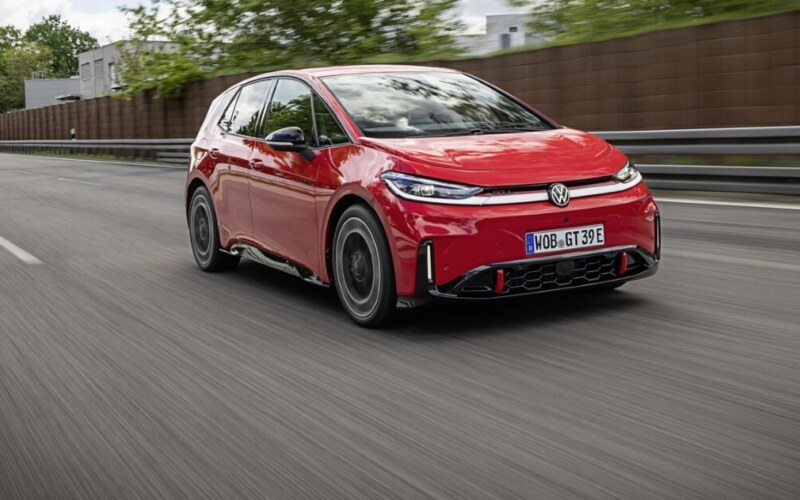
2026 Volkswagen ID.3 GTI is the car many GTI fans swore they would never accept: a GTI with no engine note, no gearshift, and, for the first time in the badge’s 50-year history, power going to the rear wheels. Volkswagen revealed it in mid-September at a media workshop in Hamburg, calling it the most powerful series-production GTI the company has ever built. The catch is that it’s described as a near-production car, it isn’t on sale yet, and it’s aimed squarely at Europe. This guide to the 2026 Volkswagen ID.3 GTI covers what Volkswagen has confirmed, what it hasn’t, and what the badge change really means for buyers.

2026 Volkswagen ID.3 GTI: What We Know and What We Don’t
Before the details, here’s a quick scorecard. Volkswagen has been generous with technical figures but silent on the commercial ones.
Confirmed by Volkswagen
- Rear-wheel drive with a single rear-mounted motor
- 240 kW (326 PS) and 545 Nm of torque
- 79 kWh usable battery with a forecast range of up to 601 km
- DC fast charging at up to 183 kW, 10 to 80 percent in about 29 minutes
- 0-100 km/h in a forecast 5.6 seconds, top speed limited to 200 km/h
- Pre-sales in early 2027, with a launch planned for the first quarter
Still Unknown
- Final price in any market
- Curb weight, cargo space, and exact dimensions
- Independent range, charging, or crash-test results
- Any plan for the United States
2026 Volkswagen ID.3 GTI: Overview
The 2026 Volkswagen ID.3 GTI is built on the updated ID.3 Neo and uses the MEB+ electric architecture. It marks the 50th anniversary of the GTI badge, which began with the original Golf GTI in 1976, and it’s the first electric production model to wear those letters. Volkswagen’s own materials from the September reveal identify it as a near-production concept vehicle, so small details could still change before customer cars arrive.
That framing matters. The car you see in the reveal photos is very close to the final product, but figures such as range and charging are forecasts, not certified ratings. For a look at how another electric performance model has fared once real customers got hold of it, see our 2026 Tesla Model 3 Review.
2026 Volkswagen ID.3 GTI: Expected Price
Volkswagen hasn’t announced pricing for the 2026 Volkswagen ID.3 GTI in any market, and the company has said final prices will arrive closer to launch. Anyone quoting a figure today is guessing. What we can say is that this will be the priciest version of the ID.3 and that it’ll be judged against both electric rivals and Volkswagen’s own petrol GTI.
That petrol car is a useful yardstick, especially for American readers. The 2026 Golf GTI sold in the United States carries list prices from roughly $34,590 to $42,480, according to U.S. News, with a 2.0-liter turbo four making 241 horsepower. The ID.3 GTI is far more powerful on paper, so expect Volkswagen to price it accordingly, but until an official figure appears there’s nothing solid to compare.
2026 Volkswagen ID.3 GTI: Release Date
Volkswagen says pre-sales of the 2026 Volkswagen ID.3 GTI begin in early 2027, with the market launch planned for the first quarter of that year. CarBuzz reports that order books should open early next year and that deliveries would follow a few months after that. In practical terms, the earliest customer cars are likely to arrive in the spring or summer of 2027.
The “2026” in the name refers to the reveal year rather than a model year you can order. That’s a common trap with cars unveiled late in the year, so double-check any dealer or listing site that suggests the car is already available.
2026 Volkswagen ID.3 GTI: Motor and Performance
Under the skin, the 2026 Volkswagen ID.3 GTI uses a single APP550 electric motor mounted at the rear axle, paired with a 79 kWh usable battery. Everything goes to the rear wheels, which makes it the first rear-wheel-drive GTI ever, and a deliberate departure from the front-drive layout that defined the Golf GTI for five decades. It also differs from the all-wheel-drive setup Volkswagen uses in its GTX models.
Volkswagen fits launch control, an adaptive DCC sports chassis, and progressive steering as standard. Those are the ingredients you’d expect on a modern hot hatch, and the rear-drive layout should give the car a different character from the front-drive cars it’s replacing in spirit, if not in showroom terms.
2026 Volkswagen ID.3 GTI: Horsepower and Acceleration
The headline figure is 240 kW, which Volkswagen quotes as 326 PS in Europe. Conversions to American horsepower vary slightly by outlet, with figures of 321 or 322 hp appearing in different reports, so the kilowatt number is the one to trust. Torque is 545 Nm, or roughly 402 pound-feet, and Volkswagen forecasts 0-100 km/h in 5.6 seconds with a top speed limited to 200 km/h.
Metric and US Figures Side by Side
| Spec | Metric | US equivalent |
|---|---|---|
| Power | 240 kW / 326 PS | About 321 to 322 hp |
| Torque | 545 Nm | About 402 lb-ft |
| 0-100 km/h | 5.6 seconds | 0-62 mph in 5.6 seconds |
| Top speed | 200 km/h (limited) | About 124 mph |
| Range (forecast) | Up to 601 km | About 372 miles (WLTP) |
CarBuzz points out that 5.6 seconds isn’t remarkable by hot-EV standards, though the torque figure should make the car feel punchier than the number suggests. The more interesting comparison is closer to home: Volkswagen’s own petrol Golf GTI Edition 50 reportedly covers the same sprint in 5.3 seconds with about 321 hp.
2026 Volkswagen ID.3 GTI: Battery and Driving Range
The 2026 Volkswagen ID.3 GTI carries the largest battery offered in the ID.3 family, a 79 kWh usable pack. Volkswagen forecasts a range of up to 601 km on the WLTP cycle, which works out to roughly 372 miles. Treat that as a best-case lab figure. WLTP numbers tend to read higher than the EPA ratings American buyers are used to, and a performance-focused car driven with enthusiasm will fall well short of its headline range.
Charging looks competitive for the class. Volkswagen quotes up to 183 kW on a DC fast charger, enough to take the battery from 10 to 80 percent in around 29 minutes. Vehicle-to-load capability is also listed as available, meaning the car can power external devices, a feature that’s still rare on small hatchbacks.
2026 Volkswagen ID.3 GTI: Driving Experience
Nobody outside Volkswagen has driven the 2026 Volkswagen ID.3 GTI yet, so what follows is informed expectation rather than verdict. The recipe is promising: rear-wheel drive, adaptive dampers, progressive steering, and a low battery pack that should keep the center of gravity down. Car magazines have already joked that it won’t sound like a GTI and, with rear drive, won’t feel like one either, which is precisely why the first road tests will matter.
The key unknown is character. GTI fans have always valued a certain playful honesty: a practical hatchback with a little mischief in it. Whether an electric, rear-driven version recreates that spirit or simply delivers speed is something only a proper drive will answer. Weight, which Volkswagen hasn’t published, will be central to that judgment.
Launch Control and Chassis Tuning
Launch control is standard, which tells you Volkswagen expects owners to use the car’s straight-line performance. The adaptive DCC chassis should let the car switch between comfortable and sharper settings, a flexibility that’s been central to the GTI formula since the beginning.
2026 Volkswagen ID.3 GTI: Exterior Design
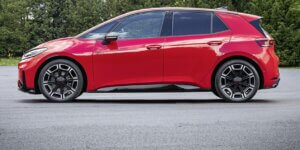
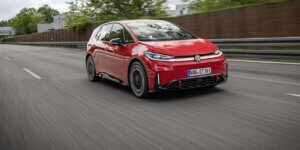
Visually, the 2026 Volkswagen ID.3 GTI leans hard on heritage. A red horizontal stripe runs between the IQ.LIGHT LED matrix headlights, a nod to the red grille surround of the original Golf GTI. Volkswagen adds new 20-inch Wörthersee alloy wheels, GTI badging, gloss-black trim elements, and sportier bumpers to separate it from the regular ID.3.
It’s a restrained approach, and a smart one. The ID.3 shape is already compact and clean, so the GTI treatment doesn’t need to shout. The red stripe does most of the work, signalling the lineage without turning the car into a caricature.
2026 Volkswagen ID.3 GTI: Interior and Technology
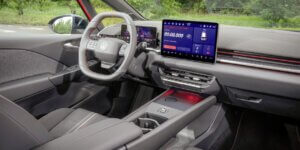
Inside, the 2026 Volkswagen ID.3 GTI gets a larger Digital Cockpit and a 12.9-inch infotainment display, a clear step up from earlier ID.3 interiors that drew criticism for being plasticky and slow. Optional equipment includes a panoramic sunroof, massage and memory functions for the front seats, a 480-watt Harman Kardon audio system, and an augmented-reality head-up display. A bicycle carrier attachment is also listed, a very European touch.
Volkswagen hasn’t published seat materials, cargo volume, or a full equipment breakdown by trim, so it’s too early to judge how much of that tech comes standard. The optional list suggests a car that wants to be taken seriously as a premium compact, not only a performance toy.
2026 Volkswagen ID.3 GTI: Safety Systems
Volkswagen hasn’t detailed the driver-assistance package, and the 2026 Volkswagen ID.3 GTI hasn’t been crash-tested. Buyers will need to wait for official ratings once the car reaches production. Because it’s a European-market model, the relevant organization is Euro NCAP, which publishes its results on its official website.
It’s also worth noting that the GTI’s added power and different drivetrain layout mean results from the regular ID.3 won’t automatically carry over. For the latest technical announcements straight from the manufacturer, Volkswagen’s official newsroom is the best place to check as launch approaches.
2026 Volkswagen ID.3 GTI: Pros and Cons
What We Like About the 2026 Volkswagen ID.3 GTI
✓ Most powerful series-production GTI Volkswagen has ever built
✓ First rear-wheel-drive GTI, a genuinely fresh take on the formula
✓ Fast charging, 10 to 80 percent in about 29 minutes
✓ Large 79 kWh battery with a forecast range up to 601 km
✓ Heritage-inspired red stripe and Wörthersee wheels
What Could Be Better on the 2026 Volkswagen ID.3 GTI
✗ No price announced for any market
✗ Not expected in the United States anytime soon
✗ 5.6-second sprint isn’t especially quick for a hot EV
✗ Slower than the petrol Golf GTI Edition 50 on paper
✗ Weight, cargo space, and real-world range remain unpublished
2026 Volkswagen ID.3 GTI vs. the Petrol GTI
The most natural comparison is against the car it’s meant to complement. The petrol Golf GTI Edition 50 reportedly makes about 321 hp and reaches 100 km/h in 5.3 seconds, slightly quicker than the electric car’s 5.6. In the United States, the regular 2026 GTI is the 241-horsepower version, which is notably less powerful than the ID.3 GTI on paper.
The trade-offs go beyond numbers. The petrol car keeps the familiar engine note, front-wheel-drive balance, and fast refuelling. The electric one offers instant torque, quiet refinement, potential home charging savings, and a new rear-drive feel. Which is the better GTI depends on what a buyer thinks the badge is about, and Volkswagen is clearly betting there’s room for both.
2026 Volkswagen ID.3 GTI: Main Competitors
In Europe, the 2026 Volkswagen ID.3 GTI will line up against compact electric performance models such as the Mini John Cooper Works Electric, the Abarth 500e, and the Alpine A290. Among combustion rivals, the Honda Civic Type R remains the benchmark for front-drive hot hatches, and CarBuzz joked that the rear-drive ID.3 GTI could be its worst nightmare, mostly because of that torque figure.
The American picture is simpler and bleaker. Volkswagen currently sells only two electric vehicles in the United States, the ID.4 SUV and the Buzz minivan, and neither is selling in numbers that would encourage more models to cross the Atlantic. For electric performance you can actually buy stateside, our 2027 Tesla Model Y Review covers the segment’s best-known option.
2026 Volkswagen ID.3 GTI: Final Verdict
On paper, the 2026 Volkswagen ID.3 GTI is a bold and sensible reinvention. It has real power, a big battery, quick charging, and a design that respects the badge without being trapped by it. Rear-wheel drive adds genuine intrigue, and the vehicle-to-load and head-up display options show Volkswagen isn’t treating this as a half-hearted badge exercise.
What’s missing is everything that decides whether a car is actually good: a price, a weight, a road test, and a clear path to the United States. Until those arrive, the ID.3 GTI is best viewed as a promising preview for European buyers and a curiosity for everyone else. Anyone following the 2026 Volkswagen ID.3 GTI should enjoy the spec sheet, but keep expectations measured until Volkswagen publishes pricing and independent testers get behind the wheel.
2026 Volkswagen ID.3 GTI Images
Specifications
Launch
| Announced | 2026, September 15 |
| Status | Available to order. Released 2026, September |
Body
| Type | 5 door hatchback, 4/5 seats |
| Dimensions | 4265 x 1809 x 1544 mm (167.9 x 71.2 x 60.8 in) |
| Drag coef. | 0.263 Cd |
| Wheelbase | 2766 mm (108.9 in) |
| Suspension | Front MacPherson struts, rear multi-link, electronic adaptive dampers |
| Wheels | R18, R19, R20 |
| Trunk | EU: 383 l, 1336 l max |
| Frunk | No |
| Towing | Yes |
Performance
| Power | RWD 240 kW (326 hp) |
| Torque | 545 Nm (402 lb-ft) |
| Acceleration | 5.6 sec 0-100 km/h |
| Max speed | 200 km/h (124 mph) |
Battery
| Capacity | 79 kWh usable, 84 kWh total |
| Tech | Liquid-cooled Li-ion 400V |
| Range | 601 km WLTP |
| Consumption | 14.5 kWh/100 km WLTP |
| Recuperation | Yes, via driving modes |
| Heat pump | Yes |
| AC Charging |
Type 2 7.2 kW Type 2 11 kW |
| DC Charging | CCS 183 kW, 10-80% in 29 min |
Displays
| Center | 12.9" touchscreen |
| Driver's | 10.25" |
| Head-up | Yes, with augmented reality |
Comfort
| Seats | Heated front seats, massage |
| Roof | Panoramic glass sunroof |
| Parking aids | 8 front and rear sensors, front and reversing camera |
| Connectivity | Android Auto and Apple CarPlay |
Safety
| Airbags | 6 airbags: front, side, rear, including head airbag system |
| Driving aids | Front radar, 2 rear corner radars, front camera. Lane Assist, Forward collision warning and extended and proactive pedestrian protection, City emergency braking system, Driver Alert system, fatigue detection, Travel Assist, Side Assist, Light Assist |
2026 Volkswagen ID.3 GTI Price
 Price in USD |
58,800 USD |
 Price in European Union |
49,980 EUR |
 Price in United Kingdom |
43,512 GBP |
 Price in Australia |
89,964 AUD |
 Price in Canada |
81,144 CAD |
 Price in India |
5,133,240 INR |
 Price in China |
422,184 CNY |
 Price in Indonesia |
952,560,000 IDR |
 Price in Philippines |
3,351,600 PHP |
 Price in Malaysia |
248,136 MYR |
 Price in Nigeria |
90,258,000 NGN |
 Price in Russia |
4,731,048 RUB |
 Price in Pakistan |
16,640,400 PKR |
 Price in Saudi Arabia |
220,500 SAR |
 Price in Japan |
8,643,600 JPY |
 Price in South Africa |
1,037,232 ZAR |
 Price in Brazil |
319,284 BRL |
 Price in Bangladesh |
7,114,800 BDT |
 Price in Mexico |
1,103,676 MXN |
More Products from Volkswagen