2028 BMW X5 Review: Price, Luxury SUV & Specs
2028 BMW X5 Review coverage lands during a genuinely pivotal era for BMW’s best-selling SUV, since this generation represents the first time the X5 has fully embraced the brand’s new Neue Klasse design language and technology platform. Having launched as an all-new fifth-generation model, the 2028 BMW X5 carries that redesign into its second model year with an even broader powertrain lineup, including the arrival of BMW’s first series-produced hydrogen fuel-cell SUV. This 2028 BMW X5 Review breaks down everything worth knowing about where this reinvented SUV stands as it matures into its sophomore year.
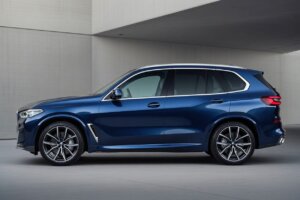
2028 BMW X5 Review: Overview
The 2028 BMW X5 continues the fifth-generation redesign that debuted for the 2027 model year, bringing BMW’s Neue Klasse design language to a gas-powered SUV for the first time. Built at BMW’s Spartanburg, South Carolina plant, this generation introduced a completely new platform, a longer wheelbase for added interior space, and the broadest range of powertrains ever offered on a single X5 generation, spanning gasoline, plug-in hybrid, and fully electric variants.
By the time the 2028 BMW X5 arrives, the lineup is expected to be fully fleshed out, with the V8-powered M Performance variant that debuted partway through the 2027 model year now firmly established, alongside the arrival of the hydrogen-powered iX5 Hydrogen, developed in partnership with Toyota as BMW’s first series-produced fuel-cell vehicle. Anyone researching a 2028 BMW X5 Review before making a purchase decision should understand this represents the most complete version yet of BMW’s boldest X5 reinvention in years.
2028 BMW X5 Review: Expected Price
While BMW hasn’t published 2028-specific pricing at the time of writing, the fifth-generation X5’s launch pricing for 2027 offers a strong baseline for what buyers should expect. The base X5 40 opened at $69,800, with the all-wheel-drive X5 40 xDrive starting around $72,100 to $73,550 depending on the source. The plug-in hybrid X5 50e xDrive started between $77,500 and $78,950, while the fully electric iX5 60 xDrive opened between $79,800 and $81,250, with all trims subject to an additional destination and handling charge.
Given typical BMW pricing patterns, buyers should expect modest increases across the 2028 BMW X5 lineup compared to those 2027 launch figures, along with new pricing tiers for the M Performance V8 model and the incoming iX5 Hydrogen once official figures are confirmed closer to their respective on-sale dates.
2028 BMW X5 Estimated Trim Pricing (Based on 2027 Launch Figures)
- X5 40 (RWD): from approximately $69,800
- X5 40 xDrive: from approximately $72,100 to $73,550
- X5 50e xDrive (PHEV): from approximately $77,500 to $78,950
- iX5 60 xDrive (BEV): from approximately $79,800 to $81,250
- M Performance V8 and iX5 Hydrogen: pricing to be announced
2028 BMW X5 Review: Release Date
The fifth-generation X5 began its rollout with the X5 40 xDrive in October 2026, followed by the RWD X5 40, the X5 50e xDrive plug-in hybrid, and the all-electric iX5 60 xDrive in the first quarter of 2027, with the V8-powered M Performance model arriving later that year. By the time the 2028 BMW X5 reaches dealerships, this staggered rollout should be complete, with the hydrogen-powered iX5 Hydrogen expected to join the lineup as BMW’s fuel-cell technology reaches series production.
2028 BMW X5 Review: Engine and Performance
The 2028 BMW X5 offers the broadest spread of powertrains in the nameplate’s history. The X5 40 uses a turbocharged 3.0-liter inline-six with 48-volt mild-hybrid assistance, producing 394 horsepower and 428 pound-feet of torque, paired with an eight-speed automatic transmission. The X5 50e xDrive plug-in hybrid pairs that same inline-six with a more powerful electric motor and a 26.5-kWh battery, producing a combined 483 to 489 horsepower and 516 pound-feet of torque, along with an EPA-estimated 44 miles of electric-only range.
The all-electric iX5 60 xDrive represents genuinely new territory for BMW, using an all-new 141.0-kWh battery architecture that shares its cell chemistry with the recently revealed iX3 while offering roughly 30 percent greater usable capacity in a denser, more compact package. That battery sends power to all four wheels, producing 578 horsepower and 593 pound-feet of torque.
2028 BMW X5 Suspension Technology
Every 2028 BMW X5 comes standard with adaptive suspension, while buyers can upgrade to an optional two-axle air suspension system for greater adjustability in ride height and overall ride quality. The electrified 50e xDrive and iX5 60 xDrive models can further be equipped with an optional motorized anti-sway bar at each axle, designed to offset body roll in corners and compensate for the added weight that comes with electrification.
2028 BMW X5 Review: Horsepower and Acceleration
With 394 horsepower, the base X5 40 delivers confident, everyday performance well suited to family SUV duty. The X5 50e xDrive steps up considerably thanks to its combined 483 to 489 horsepower output, giving plug-in hybrid buyers genuinely strong acceleration alongside the ability to run on electric power alone for shorter trips.
The all-electric iX5 60 xDrive is the quickest standard trim in the 2028 BMW X5 lineup, with 578 horsepower and 593 pound-feet of torque delivering the kind of instant, effortless acceleration that’s become a hallmark of BMW’s growing EV lineup. Buyers wanting even more performance will find the V8-powered M Performance variant sitting at the top of the range, offering the strongest acceleration of any X5 trim once full specifications are confirmed.
2028 BMW X5 Review: Fuel Consumption and Efficiency
Official EPA fuel economy figures for the 2028 BMW X5’s gasoline and plug-in hybrid trims hadn’t been finalized at the time of the fifth generation’s launch, though BMW’s continued use of a mild-hybrid-assisted inline-six on the X5 40 suggests reasonably competitive efficiency for the segment. The X5 50e xDrive’s plug-in hybrid setup allows many owners to complete short commutes entirely on electric power, meaningfully reducing real-world fuel consumption for drivers who charge regularly.
For the fully electric iX5 60 xDrive, efficiency is best measured through its EPA-estimated range rather than traditional fuel economy, with BMW targeting up to 435 miles on a single charge thanks to its new, more energy-dense battery architecture.
2028 BMW X5 Review: Battery and Driving Range
Range is a genuine strength of the electrified 2028 BMW X5 lineup. The iX5 60 xDrive’s 141.0-kWh battery is rated for up to 435 miles of range in EPA testing, an impressive figure that reflects both the battery’s increased energy density and BMW’s broader efficiency work across its Neue Klasse platform. Meanwhile, the X5 50e xDrive plug-in hybrid offers a more modest but still genuinely useful 44 miles of electric-only range from its smaller 26.5-kWh battery, enough to cover many drivers’ daily commutes without touching the gasoline engine at all.
Looking further ahead, the incoming iX5 Hydrogen will offer a different kind of range and refueling proposition entirely, pairing all-electric driving characteristics with the quick refueling times associated with hydrogen fuel-cell technology, developed through BMW’s ongoing partnership with Toyota.
2028 BMW X5 Review: Driving Experience
Behind the wheel, the 2028 BMW X5 benefits from a near 50:50 weight distribution that BMW engineered specifically to offset the added bulk of its electrified variants, helping the SUV maintain the balanced, confident handling character the nameplate has long been known for. The standard adaptive suspension provides a solid baseline ride and handling balance across the lineup, while the optional two-axle air suspension and motorized anti-sway bars give electrified variants an extra layer of composure despite their additional weight.
Across the powertrain range, the 2028 BMW X5 aims to deliver BMW’s traditional dynamic character regardless of whether a buyer chooses the efficient six-cylinder X5 40, the flexible X5 50e plug-in hybrid, or the quick, torque-rich iX5 60 xDrive.
2028 BMW X5 Interior Space
Thanks to a longer wheelbase and increased overall length compared to the previous generation, the 2028 BMW X5 offers noticeably more interior space than its predecessor, giving both front and rear passengers a roomier, more comfortable environment for longer trips.
2028 BMW X5 Review: Exterior Design
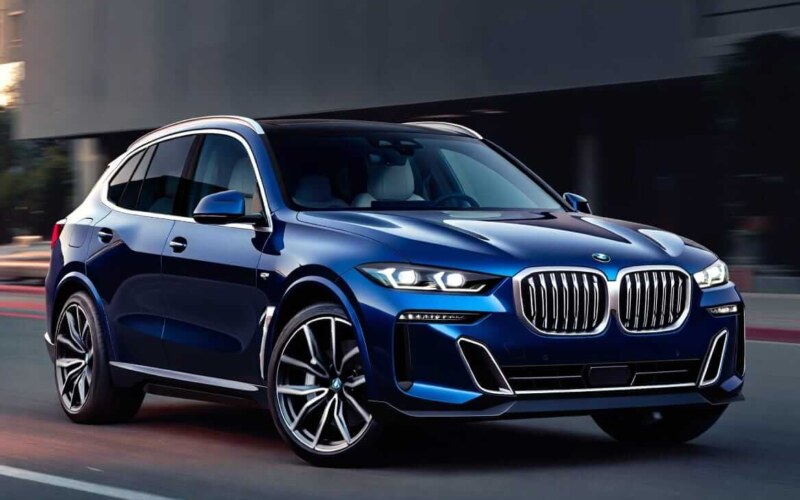
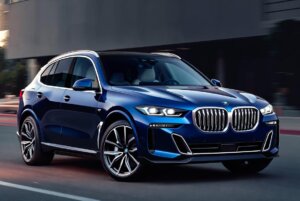
Visually, the 2028 BMW X5 represents one of the most dramatic styling shifts in the nameplate’s history, adopting BMW’s controversial Neue Klasse design language for the first time on a gasoline-powered model. Up front, distinctive X-shaped LED headlights sit within a high-set black strip, flanking an elongated, vertically oriented take on BMW’s traditional twin-kidney grille, with a large, blacked-out lower air intake completing the aggressive front-end look.
Around back, the 2028 BMW X5 features a small rear spoiler, triangular taillights, and a large cutout integrated into the liftgate, alongside a notably sportier rear bumper design than the outgoing model. In a change that’s proven divisive among longtime owners, this generation drops the X5’s traditional split-opening tailgate in favor of a single, more conventional liftgate. Wheel options now range from 21-inch units standard up to 23-inch wheels available for the first time in X5 history, further emphasizing the SUV’s bolder, more assertive road presence.
2028 BMW X5 Review: Interior and Technology
Inside, the 2028 BMW X5 introduces BMW’s Panoramic iDrive system running on the brand’s new Operating System X, bringing Neue Klasse technology to the SUV’s cabin for a more personalized, driver-oriented experience. A redesigned instrument panel showcases a free-cut Central Display positioned at the base of the windshield, while the overall cabin layout emphasizes a calm, minimalist aesthetic that keeps driver attention focused on the road ahead.
The elevated seating position, generously sized door trim surfaces, and simplified interior surfaces all work together to create what BMW describes as a more relaxed, spacious atmosphere than the outgoing model offered, benefiting further from the extra interior space the longer wheelbase makes possible.

2028 BMW X5 Review: Safety Systems
The 2028 BMW X5 is expected to carry over and expand upon the comprehensive suite of driver-assistance technology introduced with the fifth-generation redesign, building on BMW’s stated goal of “intelligent driver assistance” as one of the generation’s core pillars. Full details on specific 2028 safety feature updates are expected to be confirmed closer to the model year’s official announcement.
Buyers wanting independent, up-to-date crash-test data can check the Insurance Institute for Highway Safety (IIHS), which will evaluate the redesigned X5 alongside its closest midsize luxury SUV rivals once testing is complete.
2028 BMW X5 Review: Pros and Cons
What We Like About the 2028 BMW X5
✓ Broadest powertrain lineup in the nameplate’s history
✓ Genuinely impressive 435-mile range on the electric iX5 60 xDrive
✓ More spacious interior thanks to a longer wheelbase
✓ Advanced Panoramic iDrive technology throughout the cabin
✓ Incoming hydrogen fuel-cell variant offers a genuinely novel alternative
What Could Be Better on the 2028 BMW X5
✗ Neue Klasse styling remains divisive among longtime buyers
✗ Loss of the traditional split tailgate disappoints some owners
✗ Official 2028-specific pricing hasn’t been confirmed yet
✗ Full M Performance and hydrogen specifications still pending
2028 BMW X5 Review: Main Competitors
The 2028 BMW X5 continues to compete in one of the most contested segments in the luxury SUV market. The Mercedes-Benz GLE remains its most direct rival, offering a similarly broad range of powertrains and a more traditional design approach that may appeal to buyers wary of BMW’s bold new styling direction. The Audi Q7 rounds out the German competition, while the Genesis GV80 and Volvo XC90 offer increasingly compelling alternatives from outside the traditional German luxury establishment.
Against this field, the 2028 BMW X5 distinguishes itself primarily through the sheer breadth of its powertrain lineup, spanning efficient mild-hybrid gasoline power all the way to a genuinely long-range EV and, eventually, hydrogen fuel-cell technology that few rivals can currently match.
2028 BMW X5 Review: Final Verdict
As the fifth-generation X5 matures into its second model year, the 2028 BMW X5 looks like a genuinely ambitious reinvention of one of BMW’s most important nameplates. The combination of bold new Neue Klasse styling, a dramatically expanded powertrain lineup, and cutting-edge technology like the Panoramic iDrive system gives buyers more meaningful choice within a single X5 generation than ever before.
The styling won’t be for everyone, and some longtime owners will miss the split tailgate that’s long been an X5 signature. Even so, anyone finishing this 2028 BMW X5 Review looking for a bottom line will find a genuinely reinvented midsize luxury SUV that backs up its bold new look with real substance across performance, range, and interior technology.
2028 BMW X5 Review Images
Specifications
Specifications
| Production year | 2027 |
| Body type & seats | Luxury Mid-Size SUV, 5 Seats |
| Dimensions | 4,950 × 2,005 × 1,765 mm (estimated) |
| Weight | 2,050–2,280 kg (estimated) |
| Engine type | TwinPower Turbo Petrol |
| Engine size & cylinders | 3.0L Inline-6 / 4.4L Twin-Turbo V8 |
| Aspiration | Turbocharged / Twin Turbocharged |
| Power | 375–523 hp (expected) |
| Torque | 540–750 Nm (expected) |
| Transmission | 8-Speed Steptronic Automatic |
| Drivetrain | xDrive All-Wheel Drive (AWD) |
| Acceleration (0-100 km/h) | 4.3–5.5 sec (estimated) |
| Top speed | 250 km/h (electronically limited) |
| Fuel type | Premium Gasoline |
| Fuel consumption | 8.5–10.8 L/100 km (estimated) |
| Fuel tank capacity | 83 L |
| Brakes | Ventilated Disc Brakes, M Sport Brakes (available) |
| Steering | Electric Power Steering with Integral Active Steering |
| Infotainment | BMW Panoramic iDrive Display with BMW Operating System X |
| Connectivity | Wireless Apple CarPlay, Android Auto, Bluetooth, USB-C, Wireless Charging, BMW ConnectedDrive, 5G Wi-Fi Hotspot |
| Safety | Automatic Emergency Braking, Adaptive Cruise Control, Lane Keeping Assist, Blind Spot Detection, Parking Assistant Professional, 360° Camera, Multiple Airbags, TPMS |
2028 BMW X5 Review Price
 Price in USD
|
71,000 USD |
 Price in European Union
|
60,350 EUR |
 Price in United Kingdom
|
52,540 GBP |
 Price in Australia
|
108,630 AUD |
 Price in Canada
|
97,980 CAD |
 Price in India
|
6,198,300 INR |
 Price in China
|
509,780 CNY |
 Price in Indonesia
|
1,150,200,000 IDR |
 Price in Philippines
|
4,047,000 PHP |
 Price in Malaysia
|
299,620 MYR |
 Price in Nigeria
|
108,985,000 NGN |
 Price in Russia
|
5,712,660 RUB |
 Price in Pakistan
|
20,093,000 PKR |
 Price in Saudi Arabia
|
266,250 SAR |
 Price in Japan
|
10,437,000 JPY |
 Price in South Africa
|
1,252,440 ZAR |
 Price in Brazil
|
385,530 BRL |
 Price in Bangladesh
|
8,591,000 BDT |
 Price in Mexico
|
1,332,670 MXN |
More Products from BMW