Overview: The Core of This 2027 Volkswagen T-Roc Review
The 2027 Volkswagen T-Roc represents the second act for a nameplate that quietly became one of Europe’s best-selling vehicles. Launched originally in 2017, the first-generation T-Roc sold over two million units globally, proving that buyers wanted a Golf-sized SUV with a bit more attitude and a higher seating position. The new model builds on that winning formula with a larger footprint, a significantly upgraded interior, and the brand’s latest MQB Evo architecture.
What is immediately apparent from the specification sheets is that Volkswagen has not chased the coupe-SUV trend into absurdity. The T-Roc retains its practical, upright proportions. It has grown by roughly 12 centimeters in length, now measuring 4.37 meters, which liberates additional rear legroom and brings the boot capacity to a highly useful 475 liters. As we will explore throughout this 2027 Volkswagen T-Roc Review, this is a car designed for the realities of daily life—school runs, hardware store trips, and the occasional weekend escape—rather than for flattering the ego of its owner.
The big news beneath the surface is electrification. For the first time, the T-Roc lineup is anchored by a 48-volt mild-hybrid system, badged eTSI. There is no plug-in hybrid at launch, and no fully electric version is planned for this generation. Volkswagen is hedging its bets, and given the current state of charging infrastructure across much of Europe and beyond, that pragmatism is likely to resonate with buyers who are not quite ready to commit to full electrification but still want to lower their fuel bills.
Expected Pricing and Release Date
Pricing remains the great unresolved variable for markets outside Europe, but the European data offers a reliable benchmark. In France, the 2027 Volkswagen T-Roc 1.5 eTSI in mid-tier Style trim carries a list price of approximately €38,800. The entry-level Trend trim with the same 116-horsepower mild-hybrid powertrain starts somewhat lower, though final specifications vary by market.
For the more powerful 150-horsepower eTSI variant, which will likely be the volume seller in most markets, expect a premium of roughly €2,000 to €3,000 over the base car. Volkswagen UK has confirmed that the R-Line 1.5 eTSI 150 PS DSG starts at £39,155 on-the-road. These figures place the T-Roc squarely in the premium end of the mainstream compact SUV segment—more expensive than a base Kia Sportage or Nissan Qashqai, but competitive with a well-equipped Toyota C-HR or a mid-spec Mazda CX-30. It is important to note in this 2027 Volkswagen T-Roc Review that you are paying a premium for the badge and the build quality.
The elephant in the room, of course, is the forthcoming T-Roc R. Sources indicate a 333-horsepower flagship is in development, likely arriving in 2027 with a price tag approaching €48,000. That is a different conversation entirely, and one for another review.
As for availability, the 2027 Volkswagen T-Roc has already begun its European rollout, with order books opening through late 2026 and first customer deliveries arriving in the early months of 2027. For Australian buyers, Volkswagen has confirmed an expected launch by the end of 2026, with the mild-hybrid eTSI leading the charge. North American availability remains unlikely, as Volkswagen continues to prioritize the Taos in that market.
Engine, Performance, and Acceleration
The heart of the new T-Roc lineup is the familiar 1.5-liter four-cylinder turbocharged petrol engine, now paired with a 48-volt mild-hybrid system. This is not the sophisticated, Toyota-style full hybrid that some rivals offer. The electric motor cannot propel the car on its own for any meaningful distance. Instead, it acts as a sophisticated starter-generator, smoothing out stop-start transitions, providing a brief torque fill under acceleration, and allowing the engine to shut off during coasting at higher speeds.
Two output levels are offered. The entry point is a 116-horsepower version, producing 220 Newton-meters of torque from just 1,500 rpm. This is adequate rather than energetic. The 0-100 km/h sprint takes a leisurely 10.6 seconds, and top speed is a purely academic 196 km/h. For urban dwellers who rarely venture beyond the city limits, this will suffice. For everyone else, the 150-horsepower variant is the obvious choice.
With 150 horsepower and 250 Newton-meters on tap, the more powerful eTSI drops the 0-100 km/h time to a respectable 8.9 seconds and pushes the top speed to 212 km/h. It is not fast in the way that a Golf GTI is fast, but it feels effortlessly competent. The seven-speed DSG dual-clutch transmission—the only gearbox offered—shifts smoothly in normal driving and responds with reasonable alacrity when you ask for a downshift. Manuals are gone, a decision that will sadden a vocal minority and be entirely ignored by the vast majority of actual buyers.
It is worth noting that the 150 PS eTSI has impressed judges in towing tests, where its mid-range torque and refined DSG calibration allowed it to handle a 1,100-1,400 kg caravan with surprising composure. The Caravan and Motorhome Club awarded the T-Roc R-Line 1.5 eTSI its Towcar of the Year category for 2027, praising the engine for having “more than enough power for hill starts.” That is a real-world validation that spec-sheet warriors often overlook. As highlighted later in this 2027 Volkswagen T-Roc Review, the balance between performance and efficiency is a key selling point here.
Fuel Consumption and Electrification
Volkswagen’s official WLTP combined consumption figures for the 1.5 eTSI range between 5.5 and 5.6 liters per 100 kilometers, depending on trim and wheel size. In the less optimistic WLTP HEV charge-sustaining cycle, the T-Roc returns roughly 5.6 L/100km, which translates to about 42 mpg in American terms. Real-world economy will vary, as it always does. The mild-hybrid system’s benefits are most pronounced in urban stop-start traffic, where the engine can shut down more aggressively and the 48-volt battery can shoulder ancillary loads.
Because the 2027 Volkswagen T-Roc eTSI is a mild hybrid rather than a plug-in or full hybrid, the battery discussion is brief. Underneath the rear seats sits a small 48-volt lithium-ion battery, roughly 0.8 kWh in capacity, which stores energy recovered during braking and coasting. There is no electric-only range to speak of. The T-Roc cannot complete a school run on electrons alone, and it cannot be plugged in to charge. The battery exists solely to smooth the engine’s operation, reduce idle vibration, and provide a small efficiency buffer. If you want meaningful electric range, you will need to look elsewhere—or wait for the rumored full hybrid variant that Volkswagen is reportedly evaluating for later introduction. A complete 2027 Volkswagen T-Roc Review must always point out this limitation for EV enthusiasts.
Driving Experience
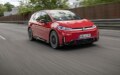
Here is where the 2027 Volkswagen T-Roc makes its strongest case. The MQB Evo platform, shared with the latest Golf and Tiguan, brings a level of chassis sophistication that was missing from the somewhat brittle-feeling first-generation car. The suspension now includes a multilink rear setup on higher trims, which pays dividends over broken pavement and mid-corner bumps.
The steering is light at parking speeds and weights up predictably as you add lock. It is not the last word in feedback—few electric power steering systems are—but it is honest and consistent. The T-Roc does not pretend to be a sports car. It is a calm, composed companion that shrinks around you in town and settles into a relaxed gait on the motorway. The Car of the Year jury put it well when they described the T-Roc as delivering “exactly what you expect from a well-bred Volkswagen,” with a balance between comfort and dynamics that “sits neatly in the middle.” A point frequently emphasized in any honest 2027 Volkswagen T-Roc Review is that this car prioritizes comfort and composure over outright sportiness. This 2027 Volkswagen T-Roc Review finds the ride quality particularly impressive on long journeys.
Exterior Design and Interior Technology
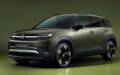
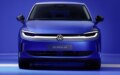
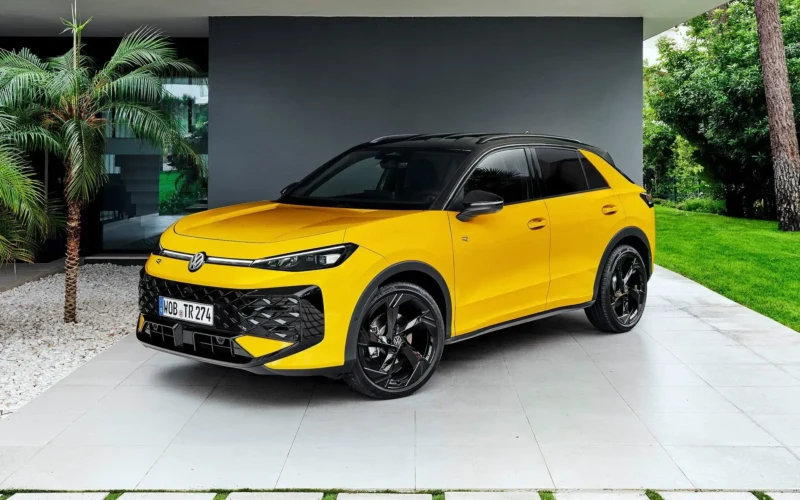
Volkswagen’s designers have walked a careful line with the new T-Roc. The silhouette is unmistakably related to the outgoing car, but the details are sharper and more contemporary. Slim LED headlights, an illuminated Volkswagen badge, and a cleaner front bumper give it a more polished face without resorting to the gaping grilles that afflict some competitors. The car has grown in length by 122 millimeters, most of which has been absorbed into the wheelbase and rear overhang. This gives it a slightly more planted stance on the road.
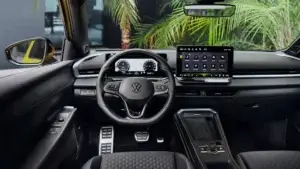
The cabin is where the 2027 Volkswagen T-Roc represents the most significant leap over its predecessor. The first-generation car was solid but dour, with plastics that felt a grade below what the price suggested. The new model redresses this comprehensively. Soft-touch materials now cover the dashboard and upper door cards, and the overall presentation has a premium sheen that borders on Audi-lite. The centerpiece is a 12.9-inch infotainment touchscreen running Volkswagen’s latest MIB4 software. The interface is quicker to respond than the system it replaces, and the menu structure is more logical.
Volkswagen has also partially reversed its controversial experiment with touch-sensitive controls. The haptic steering wheel buttons of the previous car have been replaced with proper physical buttons, which is a welcome return to sanity. The climate controls, however, remain integrated into the touchscreen, which is less welcome. There is a rotary controller on the center console that can adjust volume and, with a press, switch to driving modes or ambient lighting themes. It is a compromise solution that works well enough but lacks the simple satisfaction of a proper volume knob. Rear seat space has improved noticeably, with legroom that can accommodate a six-foot passenger behind a similarly sized driver. If interior quality is your priority, this 2027 Volkswagen T-Roc Review highly recommends the Style or R-Line trims.
Safety Systems
The 2027 Volkswagen T-Roc comes equipped with the brand’s latest suite of driver assistance systems, branded IQ.Drive. Standard equipment across the range includes autonomous emergency braking with pedestrian and cyclist detection, lane keeping assist, adaptive cruise control, and a reversing camera. Blind-spot monitoring and rear cross-traffic alert are available on higher trims.
Volkswagen’s Travel Assist system, which combines adaptive cruise control with lane centering for semi-automated highway driving, is offered on Style and R-Line models. In practice, it works well on well-marked motorways but can become confused by worn road markings or sudden lane merges—a limitation it shares with every system of this type currently on sale. The T-Roc has not yet been rated by Euro NCAP under the latest, more stringent protocols, but the related Golf and Tiguan both achieved five-star scores. Given the shared platform and comprehensive airbag coverage—including front center airbags—a strong result is expected.
Pros and Cons
Pros:
• The interior is a genuine step up in quality, with materials that finally feel appropriate for the price.
• Ride and handling balance is excellent, favoring comfort without becoming soggy or disengaged.
• The 150 PS eTSI powertrain is refined, economical, and has proven itself capable of light towing duties.
• Practicality is strong, with a usable 475-liter boot and improved rear legroom.
• Physical steering wheel buttons have returned, restoring common sense to everyday interactions.
Cons:
• The 116 PS entry-level engine is underpowered for anything beyond city limits.
• Climate controls are buried in the touchscreen, requiring a glance away from the road.
• No full hybrid or plug-in hybrid option at launch limits appeal for company car drivers.
• Pricing has crept upward, placing the T-Roc dangerously close to larger, more premium alternatives.
• The dual-clutch transmission can hesitate at low speeds in stop-start traffic, a familiar DSG trait.
Competitors
The compact SUV segment is brutally competitive, and the 2027 Volkswagen T-Roc must fend off attacks from every direction. The Toyota C-HR remains the style-led choice, with a polarizing exterior and a full hybrid powertrain that delivers significantly better urban fuel economy than the T-Roc’s mild hybrid setup. However, the Toyota’s interior feels more cramped and its infotainment system remains a generation behind Volkswagen’s latest effort.
The Mazda CX-30 offers a more premium-feeling cabin and a naturally aspirated engine that revs sweetly, but it is thirstier in real-world driving and its rear seat is tighter than the T-Roc’s. The Kia Sportage and Hyundai Tucson twins offer more metal for the money, with larger footprints, longer warranties, and a growing reputation for reliability. Finally, the Škoda Karoq deserves mention. It shares the T-Roc’s mechanical foundations but offers a more conservative design, a slightly larger boot, and typically a lower price. Throughout this 2027 Volkswagen T-Roc Review, we have seen that it holds its own well against these rivals, though the value proposition is tighter than ever.
Final Verdict: 2027 Volkswagen T-Roc Review
To conclude this comprehensive 2027 Volkswagen T-Roc Review, it is clear that this is not the most exciting car in its class. It will not generate admiring glances at the school gate, and it will not set your pulse racing on a Sunday morning drive. What it does, it does with a quiet competence that is increasingly rare in a market saturated with gimmicks and over-promises. Volkswagen has addressed the criticisms of the first-generation car with unusual directness. The interior is better. The ride is more sophisticated. The technology is finally up to scratch.
If you are shopping for a compact family SUV and value coherence over charisma, the 2027 Volkswagen T-Roc deserves a place on your shortlist. As this 2027 Volkswagen T-Roc Review has demonstrated, it is not a car that will change your life. It is a car that will quietly get on with the job, year after year, without asking for much in return. In an industry increasingly obsessed with reinvention, there is something deeply reassuring about that. We hope this 2027 Volkswagen T-Roc Review has provided you with all the necessary insights to make an informed decision.
For more detailed specifications and regional availability, consult Volkswagen UK’s official T-Roc news page.
 Price in USD
 Price in European Union
 Price in United Kingdom
 Price in Australia
 Price in Canada
 Price in India
 Price in China
 Price in Indonesia
 Price in Philippines
 Price in Malaysia
 Price in Nigeria
 Price in Russia
 Price in Pakistan
 Price in Saudi Arabia
 Price in Japan
 Price in South Africa
 Price in Brazil
 Price in Bangladesh
 Price in Mexico