2028 All-New Dacia Baby SUV : Price, Range, Specs, and Features
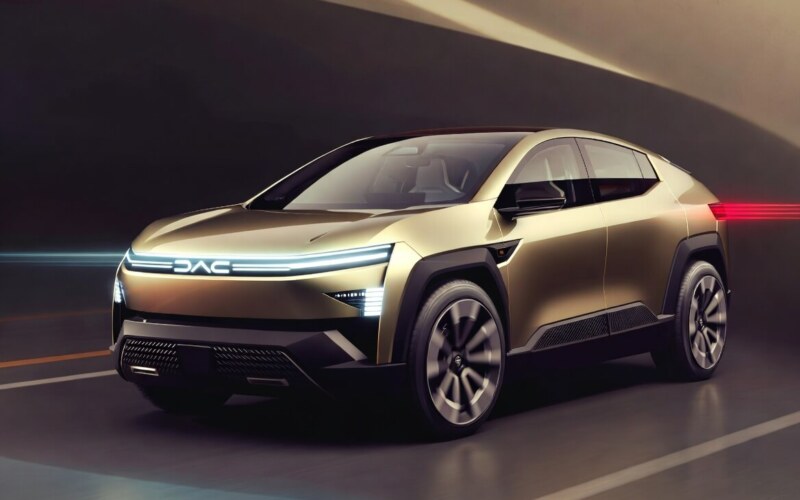
2028 All-New Dacia Baby SUV is shaping up to become one of the most important low-cost urban crossovers Europe has seen in years. As Dacia continues its aggressive expansion beyond the hugely successful Duster and Sandero families, insiders suggest the Romanian value brand is preparing a smaller, cheaper, and more efficient compact SUV aimed directly at budget-conscious drivers who want SUV styling without premium pricing.
Positioned below the Duster, this all-new entry-level model is expected to blend the practicality of a city crossover with the affordability that has made Dacia one of Europe’s fastest-growing automotive names. According to multiple future-product reports, Renault Group is investing heavily in new AmpR Small and CMF-based electric architectures that will allow Dacia to launch ultra-affordable compact EVs and hybrid SUVs by 2027–2028, making this “Baby SUV” a likely key player in the next-generation lineup. 1
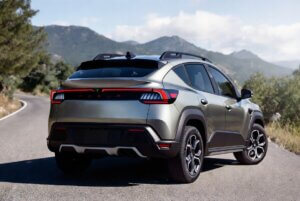
Estimated Price: The Biggest Selling Point
Dacia has built its reputation on undercutting nearly every mainstream rival, and the 2028 All-New Dacia Baby SUV is expected to follow the same formula. Industry analysts predict a starting European price between $17,000 and $22,000 depending on powertrain configuration, which would make it one of the cheapest true SUVs in the B-segment.
Even if a fully electric version joins the lineup, Dacia is likely to keep pricing well below many competitors by using smaller battery packs, simplified materials, and shared Renault Group mechanicals.
Performance and Powertrain Expectations
Although official specs remain under wraps, the Baby SUV is expected to offer multiple affordable propulsion choices. Entry-level markets may receive a 1.0-liter turbocharged gasoline engine producing around 90 horsepower, while more expensive trims could feature mild-hybrid or full-hybrid setups delivering close to 120 horsepower.
There is also increasing speculation that Dacia will launch a full EV variant shortly after release. That electric version would focus less on speed and more on low running costs, urban usability, and practical daily driving.
Estimated 0-100 km/h acceleration should land around 10 to 12 seconds depending on trim, while top speed may range between 145 and 165 km/h.
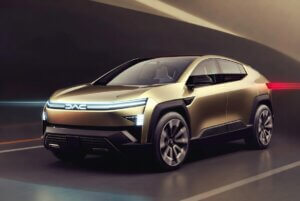
Battery, Driving Range, and Charging Time
If the electric Baby SUV arrives as expected, it will probably use a compact battery between 35 kWh and 45 kWh in order to keep costs under control. This would deliver an estimated WLTP driving range of roughly 180 to 250 miles on a full charge, making it ideal for commuters and suburban families.
Fast charging will likely remain modest rather than class-leading, with a 20% to 80% DC recharge time estimated at around 30 to 40 minutes. Standard AC home charging may take between 5 and 7 hours.
This aligns with Dacia’s low-cost EV philosophy, where affordability matters more than luxury charging performance. Interestingly, many EV community discussions note that Dacia buyers prioritize simplicity and cheap ownership over premium features, something this Baby SUV is almost certain to continue. 2
Exterior Styling: Small But Tough
Dacia has recently transformed its design language with sharper LED signatures, chunkier wheel arches, upright proportions, and a more adventurous SUV identity. The 2028 Baby SUV is expected to borrow heavily from the latest Duster and Bigster styling themes, but in a shorter and more city-friendly body.
Expect squared-off cladding, raised ride height, protective skid elements, roof rails, and a bluff front fascia that gives the vehicle a far more rugged look than a simple hatchback crossover.
Its estimated length should sit near 4.1 meters, making it easy to maneuver in dense urban environments while still visually projecting authentic SUV character.
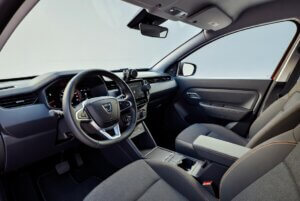
Cabin Interior and Practicality
Inside, the Dacia Baby SUV will likely continue the brand’s no-nonsense philosophy: straightforward controls, durable materials, large storage bins, and a surprisingly spacious layout considering its compact footprint.
Recent Dacia interiors have become significantly more modern, so buyers should expect improved seat comfort, higher dashboard quality, and a cleaner digital presentation than older low-budget models.
Five-passenger seating is expected, along with a cargo area estimated around 350 to 420 liters, enough for grocery runs, weekend luggage, or everyday family use.
Infotainment and Connectivity
Dacia knows budget buyers still want modern technology, so the Baby SUV should feature a touchscreen infotainment unit ranging from 8 to 10 inches depending on trim. Wireless Apple CarPlay, Android Auto, Bluetooth connectivity, USB-C ports, and over-the-air software support are all realistic possibilities.
Upper trims may also gain a digital driver display and smartphone-based vehicle management for EV charging status, battery preconditioning, and remote cabin controls.
Safety Technologies
One of the biggest criticisms of earlier cheap Dacia products was safety equipment, but European regulations now demand a much higher baseline. As a result, the 2028 model should include autonomous emergency braking, lane keeping assist, traffic sign recognition, rear parking sensors, adaptive cruise control on premium trims, and improved structural crash protection.
This will be crucial because many buyers now expect budget pricing without sacrificing modern driver assistance.
Pros of the 2028 All-New Dacia Baby SUV
- Very affordable entry price
- Modern rugged SUV styling
- Likely hybrid and EV options
- Excellent city practicality
- Low maintenance and ownership costs
- Renault-backed new-generation platform
Cons of the 2028 All-New Dacia Baby SUV
- Charging speeds may be average
- Interior materials will remain basic
- Performance will prioritize efficiency over excitement
- Premium comfort features may be limited
Final Verdict
The 2028 All-New Dacia Baby SUV could easily become the next giant killer in Europe’s budget crossover market. It promises exactly what many buyers are asking for right now: SUV looks, efficient running costs, modern safety, practical interior space, and a genuinely reachable price point.
Rather than trying to compete with expensive premium compact crossovers, Dacia appears focused on building a simple, honest, and useful small SUV for normal drivers. If Renault Group successfully delivers the expected hybrid and electric technology at Dacia-level pricing, this Baby SUV may become one of the smartest affordable automotive launches of 2028.
Source reference: Carscoops Future Dacia Development Report
2028 All-New Dacia Baby SUV Images
Specifications
Specifications
| Production year | 2028 |
| Body type & seats | Mini SUV / 5 seats |
| Dimensions | 3.7 – 3.9 m length |
| Weight | 1000 – 1200 kg |
| Engine type | Petrol / Hybrid (possible EV version) |
| Engine size & cylinders | 1.0L – 1.2L / 3 cylinders |
| Aspiration | Turbo / Mild Hybrid |
| Power | 80 – 120 hp |
| Torque | 140 – 200 Nm |
| Transmission | Manual / Automatic (CVT or 6AT) |
| Drivetrain | FWD (AWD optional low trims) |
| Acceleration (0-100 km/h) | 0–100 km/h: 11 – 14 sec |
| Top speed | 155 – 170 km/h |
| Fuel type | Petrol / Hybrid |
| Fuel consumption | 4.5 – 6.5 L/100 km |
| Fuel tank capacity | 40 – 45 L |
| Brakes | Disc front / Drum rear |
| Steering | Electric (EPS) |
| Infotainment | 8 – 10" screen |
| Connectivity | Apple CarPlay / Android Auto / Bluetooth |
| Safety | ABS, ESC, AEB, Lane Assist, Rear Camera, Airbags |
2028 All-New Dacia Baby SUV Price
 Price in USD
|
17,000 USD |
 Price in European Union
|
14,450 EUR |
 Price in United Kingdom
|
12,580 GBP |
 Price in Australia
|
26,010 AUD |
 Price in Canada
|
23,460 CAD |
 Price in India
|
1,484,100 INR |
 Price in China
|
122,060 CNY |
 Price in Indonesia
|
275,400,000 IDR |
 Price in Philippines
|
969,000 PHP |
 Price in Malaysia
|
71,740 MYR |
 Price in Nigeria
|
26,095,000 NGN |
 Price in Russia
|
1,367,820 RUB |
 Price in Pakistan
|
4,811,000 PKR |
 Price in Saudi Arabia
|
63,750 SAR |
 Price in Japan
|
2,499,000 JPY |
 Price in South Africa
|
299,880 ZAR |
 Price in Brazil
|
92,310 BRL |
 Price in Bangladesh
|
2,057,000 BDT |
 Price in Mexico
|
319,090 MXN |
More Products from Dacia