Dacia Striker 2027 : Price, Range, Specs, and Features
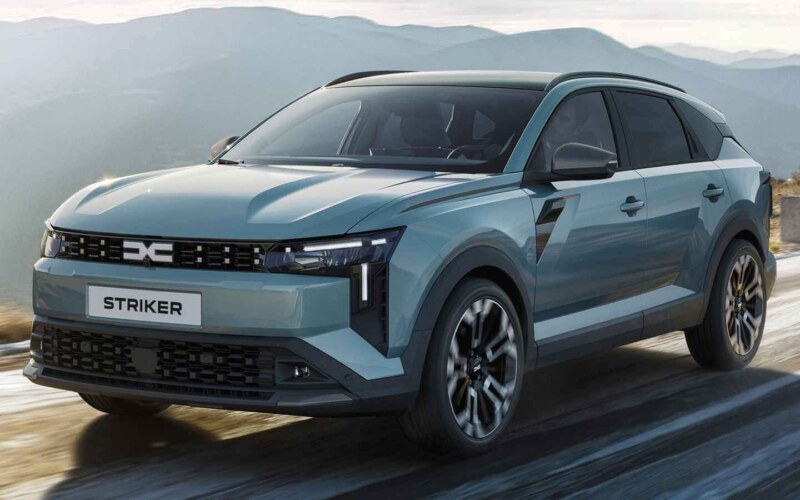
Dacia Striker 2027 is the Romanian marque’s boldest move yet into the heart of the European family car segment. Blurring the lines between an estate, an SUV, and a crossover, this 4.62-metre vehicle is designed to strike a balance no competitor can match: maximum practicality at a minimum price. With official details confirmed in early 2026 by sources like Coches.com, the model is set to hit showrooms in the first half of 2027.
Engineered to serve as a “lifestyle estate,” the Striker takes direct aim at staples like the Skoda Octavia Combi while undercutting them on price. But can a car built on the principles of extreme affordability truly deliver the performance, technology, and comfort modern buyers expect? We dive deep into the specs, the driving experience, and the ownership proposition to find out.
Design and Exterior: Function Meets Robustness
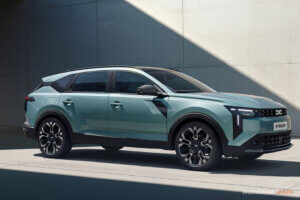
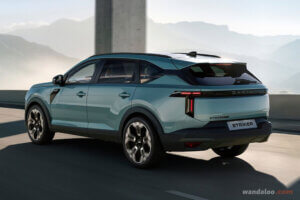
The 2027 Dacia Striker doesn’t reinvent the wheel, but it refines the brand’s “no-nonsense” design language into a more mature silhouette. The front fascia is distinctively vertical—a trait shared with the Dacia Bigster—framed by a redesigned Y-shaped LED daytime running light signature that adds a graphic, modern edge [citation:3]. A glossy black strip connects the taillights at the rear, visually widening the stance and emphasizing durability over delicacy [citation:3].
With a length of 4.62 meters, the Striker is actually longer than its SUV sibling, the Bigster, yet its roof line slopes downward in a shooting-brake style to improve aerodynamics [citation:1][citation:5]. Pronounced wheel arches and a technical surface texture on the lower body panels hint at its “go-anywhere” aspirations. It’s a car that looks equally at home parked in front of a city office as it does navigating a muddy country lane.
Interior and Practicality: Cleverly Skimped
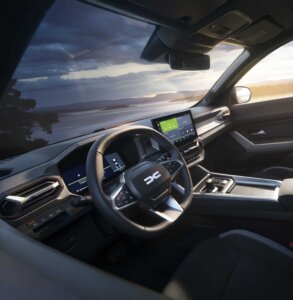
Step inside the Dacia Striker, and you are met with a cabin that adheres strictly to the brand’s philosophy: you only pay for what you need. The dashboard design focuses on physical, tactile controls that are easy to operate while wearing gloves—a subtle nod to its rural and utility potential [citation:3]. Material choices are dominated by hard-wearing, textured plastics that feel built to last decades, though they lack the soft-touch premium feel of German rivals [citation:7].
Space is the Striker’s superpower. Built on a platform shared with the Bigster, the interior provides class-leading headroom and legroom for rear passengers, easily seating three adults in the back. Dacia is integrating modular solutions such as configurable seating and accessory mounting points designed for intensive family or leisure use [citation:3]. With the rear seats up, the cargo volume is generous; folded flat, the boot transforms into a cavernous load area ready for flat-pack furniture or camping gear. Critics often cite the lack of premium softness in the cabin, but in terms of sheer space and robustness, the Striker excels [citation:7].
Performance and Engine Range
Under the bonnet, Dacia is following its multi-energy strategy. While full technical specifications are pending the official reveal in June 2026, the brand has confirmed three core powertrains for the Striker [citation:2][citation:6].
-
- Full Hybrid (HEV): Likely utilizing a naturally aspirated 1.8-liter or 1.6-liter petrol engine paired with an electric motor. In urban environments, this setup allows the Striker to drive in pure electric mode for a significant portion of the time, drastically cutting fuel consumption during stop-and-go traffic [citation:3]. Expected total power output is around 140-155 HP [citation:6].
-
- Hybrid 4×4: A unique proposition in the value segment. This variant adds an electric motor mounted on the rear axle, providing all-wheel-drive capability. It offers improved traction for slippery roads, light off-roading, or navigating fields—ideal for the “Polish countryside” applications mentioned by Polish automotive journalists [citation:1].
-
- LPG (ECO-G): The pragmatic choice. Running on liquefied petroleum gas keeps the cost per kilometer incredibly low, with the substantial advantage of an extended total range when combined with the petrol tank. This option remains king for pragmatic buyers who prioritize wallet-friendliness over electrification.
Transmission options are expected to include a 6-speed manual for entry-level trims and a CVT automatic for the hybrid modes. The naturally aspirated and small turbo engines may feel slightly underpowered during hard acceleration on highways, but the torque delivery from the electric motor in the hybrid versions fills in the gap nicely for city and suburban driving [citation:7].
Battery, Range, and Charging (Hybrid Models)
It is crucial to clarify that the 2027 Dacia Striker is not a plug-in hybrid (PHEV) or a fully electric vehicle (EV). The “Full Hybrid” system is a self-charging setup where a relatively small battery pack (likely around 1.2 kWh) is recharged via regenerative braking and the combustion engine. There is no external charging port to plug into a station.
The benefit of this battery is not long-distance zero-emission driving, but rather an efficient “gliding” capability. In heavy city traffic, the Striker can spend up to 80% of the time running on electricity alone, according to Dacia’s simulations [citation:3]. This significantly reduces wear on the combustion engine and lowers CO2 emissions without requiring the driver to ever find a wall outlet. The total driving range, backed by a standard petrol tank, comfortably exceeds 700 km.
Technology and Safety Features
Historically, Dacia has been a decade behind in driver-assistance tech, but regulation and consumer demand have forced a generational leap in the Striker. The vehicle is built to meet the latest European GSR2 safety standards, equipping every model with mandatory systems including Intelligent Speed Assist, Lane Keeping Aid, and Autonomous Emergency Braking that detects pedestrians and cyclists [citation:6].
The centerpiece of the dashboard is a central touchscreen display featuring wireless Apple CarPlay and Android Auto. A wireless smartphone charging pad is also available, alongside a fully digital instrument cluster on higher trims [citation:6]. While you won’t find the massive “hyperscreens” seen in luxury SUVs, the interface is responsive, the graphics are clear, and the menu navigation is deliberately simple. The blind-spot monitoring and rear parking sensors make maneuvering the 4.62-meter estate surprisingly easy.
Advantages (Pros)
-
- Unbeatable Price Point: Starting under €25,000 in Europe, it is thousands less than the Skoda Octavia or VW Golf Variant [citation:5].
-
- Maximized Space: A 4.62-meter length with a high roofline provides a vast interior and boot that surpasses most direct compact rivals [citation:1].
-
- Innovative Hybrid 4×4: The combination of an electrified powertrain and all-wheel drive is rare at this price point, giving it unique traction in poor weather.
-
- Total Cost of Ownership: The LPG and Full Hybrid versions deliver exceptionally low running costs, ideal for high-mileage users [citation:7].
-
- Rugged Build: Simple, “honest” materials and physical buttons ensure longevity and ease of use in harsh environments [citation:3].
Disadvantages (Cons)
-
- Hard Plastics Galore: The cabin lacks the soft-touch dashboard and plush fabrics of pricier competitors [citation:7].
-
- Highway Acceleration: Smaller combustion engines can feel strained when attempting sudden overtakes at high speeds [citation:7].
-
- No Plug-in Hybrid Option: The absence of a PHEV or full EV model limits tax benefits and zero-emission city access in some regions.
-
- Limited “Premium” Features: Base trims miss out on luxuries like heated seats, panoramic sunroofs, and adaptive dampers.
-
- Resale Value Perceptions: The “budget brand” badge may affect long-term depreciation rates compared to the VW Group rivals it targets.
Price and Market Positioning
Dacia has strategically positioned the 2027 Striker to disrupt the compact family segment. An entry price confirmed to be “below €25,000” fundamentally undercuts the nearest rival by a wide margin [citation:2][citation:5]. The hybrid 4×4 variant, while pricier, is expected to remain well under the €30,000 threshold, making it the cheapest all-wheel-drive hybrid estate on the market [citation:7].
The range is expected to consist of three main trims: the base Essential (manual, basic connectivity), the Expression (adding infotainment and AC), and the Extreme (roof rails, all-wheel drive, specific upholstery). The Striker fills the vacuum left by departing compact MPVs, offering a “car for everything”—a family hauler, a work colleague, and a holiday companion [citation:3].
Final Verdict
The Dacia Striker 2027 is exactly what the market needs right now. It refuses to chase the premium crowd, instead laser-focusing on genuine utility. It drives decently, has space to spare, and introduces a clever hybrid 4×4 system that will appeal to practical minds in rural and mountainous regions. The design is far more mature than previous Dacias, finally shedding the “cheap” aesthetic for a “rugged” one.
If you are a buyer who prioritizes interior plushness or badge snobbery, the Striker will disappoint you. But for everyone else needing a spacious, honest family car with modern connectivity and hybrid power at a remarkably fair price, the Striker scores a direct hit. It is a lifestyle estate that refuses to waste your money.
2027 Dacia Striker Images
Specifications
Specifications
| Production year | 2027 |
| Body type & seats | Compact SUV / 5 seats |
| Dimensions | Approx. 4.6 m length |
| Weight | Not officially announced |
| Engine type | Hybrid / LPG / Hybrid 4x4 |
| Engine size & cylinders | 1.2L 3-cylinder hybrid |
| Aspiration | Turbocharged / Naturally aspirated (hybrid) |
| Power | 120 – 155 hp |
| Torque | Approx. 170 – 205 Nm |
| Transmission | Automatic |
| Drivetrain | Front-wheel drive (FWD) |
| Acceleration (0-100 km/h) | Approx. 8.8 – 10.5 sec |
| Top speed | Approx. 180 km/h |
| Fuel type | Petrol Hybrid |
| Fuel consumption | Approx. 4.8 L/100 km |
| Fuel tank capacity | 50 L |
| Brakes | Front disc / Rear disc or drum |
| Steering | Electric power steering |
| Infotainment | 10-inch touchscreen |
| Connectivity | Apple CarPlay / Android Auto / Bluetooth / USB-C |
| Safety | ABS / ESP / Lane assist / Emergency braking / Airbags / Parking sensors |
2027 Dacia Striker Price
 Price in USD
|
20,000 USD |
 Price in European Union
|
17,000 EUR |
 Price in United Kingdom
|
14,800 GBP |
 Price in Australia
|
30,600 AUD |
 Price in Canada
|
27,600 CAD |
 Price in India
|
1,746,000 INR |
 Price in China
|
143,600 CNY |
 Price in Indonesia
|
324,000,000 IDR |
 Price in Philippines
|
1,140,000 PHP |
 Price in Malaysia
|
84,400 MYR |
 Price in Nigeria
|
30,700,000 NGN |
 Price in Russia
|
1,609,200 RUB |
 Price in Pakistan
|
5,660,000 PKR |
 Price in Saudi Arabia
|
75,000 SAR |
 Price in Japan
|
2,940,000 JPY |
 Price in South Africa
|
352,800 ZAR |
 Price in Brazil
|
108,600 BRL |
 Price in Bangladesh
|
2,420,000 BDT |
 Price in Mexico
|
375,400 MXN |
More Products from Dacia