- Home
- Volkswagen
- 2027 Volkswagen Passat Review
2027 Volkswagen Passat Review: Price, Specs and Verdict
2027 Volkswagen Passat Review: The Sensible Estate That Grew Up Into a Quiet Luxury Cruiser
The Volkswagen Passat has been the default answer to “what car should a sensible family buy?” for more than fifty years. In its ninth generation it has changed more than at any point in its history: it is now sold in Europe only as a five-door estate, it has been engineered from scratch on the same platform as the Škoda Superb, and its plug-in hybrid versions now offer an electric range that rivals a small EV. This 2027 Volkswagen Passat Review covers that car, which is the Passat most European buyers can actually order, and explains how it differs from the sedan still sold in China. It competes with the Škoda Superb, Ford Mondeo’s successors, the Toyota Camry-sized estates and the Audi A4 Avant, and this 2027 Volkswagen Passat Review will help you judge whether the Passat is still the safe choice.
A quick note on method. Volkswagen has not published a detailed 2027 model-year announcement or official 2027 pricing for the European Passat at the time of writing, and early information suggests a carryover of the current line-up. This 2027 Volkswagen Passat Review is therefore built on the confirmed ninth-generation specifications, Volkswagen’s own press material and independent road tests, and we will update it as soon as official 2027 changes are published. The Passat has not been sold in the United States since the 2022 model year.
🚗 2027 Volkswagen Passat Review: At a Glance
💰 Price: from around €40,000 in Germany, with UK plug-in hybrids from roughly £43,700 ⚙️ Engines: 1.5 eTSI mild hybrid, 2.0 TDI diesel, 1.5 TSI eHybrid (204 PS or 272 PS) 🔋 Battery (eHybrid): 19.7 kWh net, 25.7 kWh gross ⚡ Electric range: up to about 100 km WLTP 🧳 Boot: 690 litres (510 to 530 litres in the eHybrid), up to 1,920 litres seats down 🛡️ Safety: full driver-assistance suite across the range 📌 Body style: five-door estate in EuropeThe Passat is no longer the car you buy because you have to. It’s the car you buy because it quietly does everything right.
2027 Volkswagen Passat Review: Pros and Cons
✅ Pros
-
- A giant 690-litre boot that beats many luxury estates
-
- Plug-in hybrid with a genuinely useful electric range of around 100 km WLTP
-
- Quiet, refined and comfortable on long journeys
-
- 50 mm more rear legroom than the previous generation
-
- Excellent aerodynamics, with a drag coefficient of 0.25
-
- Wide choice of engines, from diesel to a 272 PS plug-in
❌ Cons
-
- Estate only, with no sedan in Europe
-
- Not sold in the US, where the Passat ended after 2022
-
- eHybrid boot shrinks by around 160 litres because of the battery
-
- Handling is safe rather than sparkling
-
- Plug-in versions cost much more than the old GTE
-
- Screen-heavy interface divides opinion
2027 Volkswagen Passat Price and Estimated Cost of Ownership
Volkswagen launched the ninth-generation Passat Variant in Europe from €39,995, and prices have crept up since. In the United Kingdom, plug-in eHybrid models have been listed from roughly £43,700 to about £50,700, a big step up from the old Passat GTE. Volkswagen has not announced 2027 pricing, and buyers should expect a modest increase over current figures.
This 2027 Volkswagen Passat Review sees the value story as strongest at the top and bottom of the range. The mild-hybrid petrol is the cheapest way in and returns respectable fuel economy, while the eHybrid can cut fuel costs dramatically for drivers who plug in regularly. Official WLTP figures for a plug-in hybrid are famously unrealistic, but an electric range of 60 to 80 miles in real conditions means many owners will rarely use petrol on commutes. Servicing is simple and Volkswagen offers fixed-price plans, though long-term running costs on a car this large will always be higher than on a compact hatchback.
2027 Volkswagen Passat Review: Performance
The Passat range centres on a few well-judged engines. The 1.5 eTSI mild-hybrid petrol and the 2.0 TDI diesel both produce around 150 PS, paired with a seven-speed DSG dual-clutch automatic and front-wheel drive, while the plug-in eHybrid combines a 1.5-litre turbo petrol with an electric motor for either 204 PS and 350 Nm or 272 PS and 400 Nm. The eHybrid uses a six-speed DSG, and the 204 PS version accelerates from 0 to 100 km/h in around 8 seconds, with a top speed of about 220 km/h.
Driving the Passat is a calm, pleasant experience. CAR magazine summed it up as “Captain Sensible” and scored it 4 out of 5 overall, with 5 out of 5 for usability and 3 out of 5 for handling. This 2027 Volkswagen Passat Review agrees: the steering is accurate rather than exciting, the ride is composed and the cabin is impressively quiet. The eHybrid is especially smooth, with instant electric response and an engine that stays hushed when it wakes up.
Battery, Driving Range and Charging Time
This is the section where the Passat has changed most. The plug-in eHybrid now carries a 25.7 kWh gross battery with 19.7 kWh usable, almost double the 10.6 kWh net capacity of the previous Passat GTE. Volkswagen claims an electric WLTP range of about 100 km, with UK ratings of up to roughly 77 to 82 miles depending on the version. In real-world testing in cold weather, Auto Express saw 60 miles from a battery charged to 90 per cent, which is still a strong result for a plug-in hybrid.
Charging is much improved. The eHybrid accepts AC charging at up to 11 kW, up from 3.6 kW previously, and supports DC rapid charging at up to 50 kW at public points. By our calculation, a flat battery should refill in roughly two to three hours from a full-power 11 kW wallbox, while the 50 kW DC option is useful for quick top-ups on long trips. Combined with the petrol engine, the car has a theoretical total range of more than 900 km. The mild-hybrid and diesel versions have no plug and no traction battery to charge, relying on their 66-litre fuel tank for range.
2027 Volkswagen Passat Review: Exterior Styling
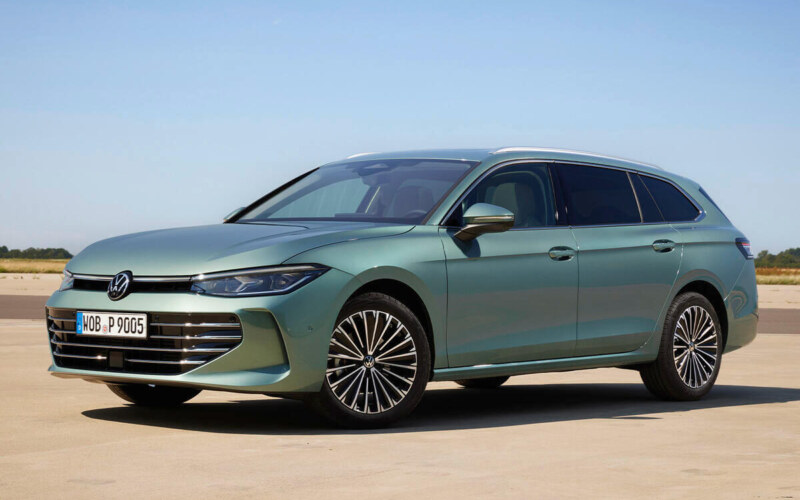
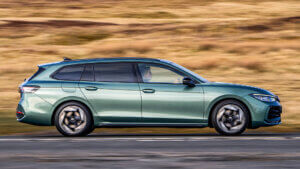
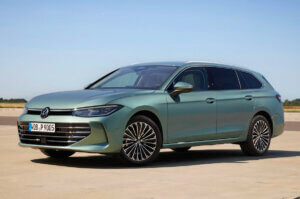
The ninth-generation Passat is sleeker and more upmarket than any before it. A long bonnet, a low roofline and a drag coefficient of just 0.25, down from 0.31, give it a dignified profile that suits its luxury ambitions. This 2027 Volkswagen Passat Review found the estate shape handsome and well proportioned, with clean surfaces and a full-width light bar at the front and rear.
Matrix LED headlights are available, and higher trims add larger alloy wheels and R-Line styling for a more athletic look. In China, the Passat Pro takes a different approach as a traditional sedan, with a blacked-out front grille, full-width tail light strip and illuminated Volkswagen logo, but that car is not sold in Europe or the United States.
2027 Volkswagen Passat Review: Cabin Interior and Comfort
Space is the Passat’s superpower. Rear legroom is 50 mm greater than before, the boot holds 690 litres with the seats up and 1,920 litres with them folded, and this 2027 Volkswagen Passat Review found enough room for five adults and their luggage without complaint. That boot is bigger than the one in a Mercedes E-Class Estate, which says a lot about how much practicality Volkswagen has packed in.
The cabin feels more premium than before, with soft-touch materials, ambient lighting and supportive seats on long journeys. Plug-in versions lose some luggage space because the battery sits under the boot floor, with the boot shrinking to around 510 to 530 litres, but that is still generous for the class.
Infotainment and Connected Technology
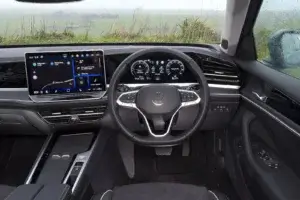
The Passat comes with a large central touchscreen of around 13 inches and a digital driver display, with smartphone integration and Volkswagen’s latest connected services. Higher trims add premium audio and a head-up display. In China, the Passat Pro goes further with a 15-inch main screen and a separate 11.6-inch display for the front passenger.
This 2027 Volkswagen Passat Review found the technology modern and well integrated, though the heavy reliance on the touchscreen for functions such as climate control divides opinion and takes some getting used to. Over-the-air updates and app connectivity keep the car feeling current.
2027 Volkswagen Passat Review: Safety Technologies
Every Passat comes with a comprehensive suite of driver aids, including adaptive cruise control with lane centring, emergency braking, lane assistance and blind-spot monitoring. Reviewers note that the latest technology and safety equipment is included across the whole range, which makes the Passat an easy car to live with on motorways and in traffic.
For the latest independent crash-test results, check the Euro NCAP safety ratings database before buying, since ratings and criteria are updated regularly and equipment can vary by trim and market.
2027 Volkswagen Passat Review: Practicality and Ownership
Practicality is where the Passat justifies its price. The huge boot, flat load floor, generous rear seat and low loading lip make it one of the most usable family cars on sale, and the plug-in version can cover most daily journeys on electricity alone while still handling long holidays on petrol.
Ownership is straightforward. The mechanicals are shared with the Škoda Superb and other Volkswagen Group models, which keeps parts and servicing simple, and plug-in hybrid owners benefit from lower company-car tax in some markets. The main compromise is that the eHybrid costs considerably more than the old Passat GTE, so it makes the most sense for buyers who will actually plug in.
Which Passat Should You Buy, and What Are the Alternatives?
-
- Best overall: the 204 PS eHybrid, with up to roughly 100 km of electric range and strong efficiency.
-
- Best for performance: the 272 PS eHybrid, which adds extra pace without hurting range much.
-
- Best for big luggage and long distance: the 1.5 eTSI mild hybrid, with the full 690-litre boot and a 66-litre tank.
-
- Best for high mileage: the 2.0 TDI, which still suits drivers who cover many motorway miles.
Alternatives include the Škoda Superb, which shares the platform and often costs less, and the Audi A4 Avant for a more prestigious badge. Buyers in the United States should look at the Volkswagen Tiguan or Atlas Cross Sport, since the Passat is no longer sold there. This 2027 Volkswagen Passat Review sees the Passat as the most balanced of the group, with a better plug-in system than most rivals.
What About the Chinese Passat Pro Sedan?
China gets a different car. The 2027 Passat Pro from SAIC Volkswagen is a petrol-only midsize sedan with a 1.5-litre turbo making 160 hp and 250 Nm, or a 2.0-litre turbo making 220 hp and 350 Nm, both paired with a seven-speed DSG. The 2.0T reaches 100 km/h in 7.6 seconds with a combined WLTC consumption of 6.87 L/100 km, and prices run from RMB 172,000 to RMB 239,900, with introductory offers starting at RMB 139,900. It is not sold in Europe, so European buyers wanting a traditional Passat sedan have no option.
2027 Volkswagen Passat Review: Our Rating
Frequently Asked Questions
Is there a 2027 Volkswagen Passat?
Yes, in Europe the ninth-generation Passat Variant continues, and China sells the 2027 Passat Pro sedan. Volkswagen has not published detailed 2027 changes for Europe, and the Passat is not sold in the United States.
How far can the Passat eHybrid go on electric power?
Volkswagen claims about 100 km WLTP, with UK ratings of up to roughly 77 to 82 miles, and independent testing in cold conditions saw around 60 miles from a 90 per cent charge.
How fast does the Passat eHybrid charge?
It accepts AC charging at up to 11 kW and DC rapid charging at up to 50 kW. A full charge takes roughly two to three hours on a full-power home wallbox.
How big is the Passat’s boot?
690 litres with the rear seats up and 1,920 litres with them folded, falling to around 510 to 530 litres in the plug-in hybrid.
Is this 2027 Volkswagen Passat Review based on official 2027 specifications?
Not entirely. Volkswagen has not published detailed 2027 changes, so this 2027 Volkswagen Passat Review uses the confirmed current specifications and we will update it as official figures arrive.
2027 Volkswagen Passat Review: Final Verdict and Is It Worth Buying?
The 2027 Volkswagen Passat is one of the best all-round family cars on sale. A huge boot, a spacious and comfortable cabin, a quiet ride and a plug-in hybrid with an electric range close to 100 km make it both practical and efficient, and it feels more upmarket than any Passat before it.
Its weaknesses are limited but real. It is sold only as an estate in Europe, it is unavailable in the United States, the plug-in versions cost a lot more than the old GTE, and the handling is competent rather than thrilling. Buyers who want a traditional sedan or a sportier drive should look elsewhere.
For families who want comfort, space and efficiency in one calm, well-built package, the Passat is an easy recommendation. That is where this 2027 Volkswagen Passat Review lands, and we will revisit this 2027 Volkswagen Passat Review once Volkswagen confirms official 2027 changes and pricing.
2027 Volkswagen Passat Review Images
Specifications
Specifications
| Production year | 2027 |
| Body type & seats | Station Wagon, 5 Seats |
| Dimensions | 4,917 × 1,849 × 1,497 mm |
| Weight | 1,578–1,895 kg |
| Engine type | Turbocharged Petrol / Diesel |
| Engine size & cylinders | 1.5L / 2.0L, 4-Cylinder |
| Aspiration | Turbocharged |
| Power | 160–265 hp Petrol / 122–193 hp Diesel |
| Torque | 250–400 Nm |
| Transmission | 7-Speed DSG Automatic |
| Drivetrain | FWD / AWD |
| Acceleration (0-100 km/h) | 5.8–9.0 sec |
| Top speed | 220–250 km/h |
| Fuel type | Gasoline / Diesel |
| Fuel consumption | 5.5–7.5 L/100 km |
| Fuel tank capacity | 66 L |
| Brakes | Ventilated Disc Brakes, ABS |
| Steering | Electromechanical Power Steering |
| Infotainment | 12.9-inch / 15-inch Touchscreen |
| Connectivity | Apple CarPlay, Android Auto, Bluetooth, USB-C |
| Safety | Front Assist, Adaptive Cruise Control, Lane Assist, Blind Spot Monitoring, Travel Assist, Multiple Airbags |
2027 Volkswagen Passat Review Price
 Price in USD |
67,500 USD |
 Price in European Union |
57,375 EUR |
 Price in United Kingdom |
49,950 GBP |
 Price in Australia |
103,275 AUD |
 Price in Canada |
93,150 CAD |
 Price in India |
5,892,750 INR |
 Price in China |
484,650 CNY |
 Price in Indonesia |
1,093,500,000 IDR |
 Price in Philippines |
3,847,500 PHP |
 Price in Malaysia |
284,850 MYR |
 Price in Nigeria |
103,612,500 NGN |
 Price in Russia |
5,431,050 RUB |
 Price in Pakistan |
19,102,500 PKR |
 Price in Saudi Arabia |
253,125 SAR |
 Price in Japan |
9,922,500 JPY |
 Price in South Africa |
1,190,700 ZAR |
 Price in Brazil |
366,525 BRL |
 Price in Bangladesh |
8,167,500 BDT |
 Price in Mexico |
1,266,975 MXN |
More Products from Volkswagen