2026 Porsche 911 GT3 RS : Price, Range, Specs, and Features
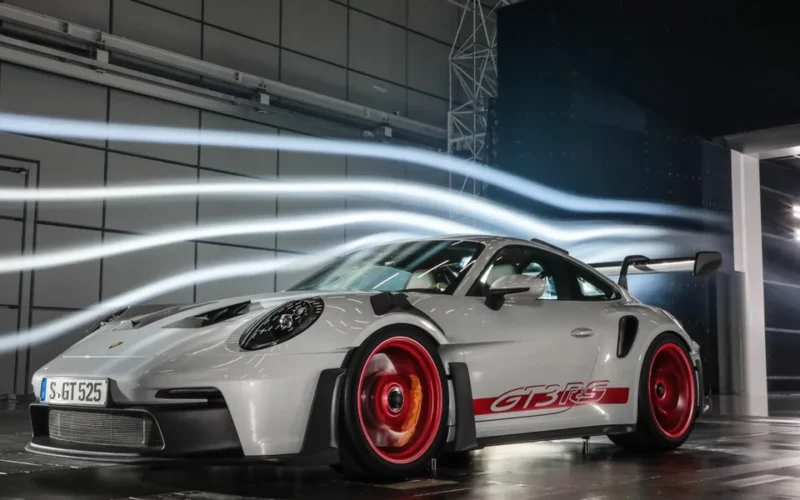
2026 Porsche 911 GT3 RS
The 2026 Porsche 911 GT3 RS continues to stand as one of the purest driver-focused machines ever built by Porsche. In an automotive world increasingly dominated by electrification, automation, and digital isolation, the GT3 RS remains unapologetically mechanical, emotional, and brutally precise.
Designed with heavy influence from motorsport engineering, the 2026 Porsche 911 GT3 RS is far more than a traditional sports car. It is essentially a road-legal race machine engineered for drivers who value aerodynamic efficiency, razor-sharp handling, and naturally aspirated performance above everything else.
Unlike many supercars that prioritize luxury or straight-line acceleration, the GT3 RS focuses on delivering the most engaging and connected driving experience possible. Every detail, from the massive rear wing to the lightweight construction and advanced suspension setup, serves a functional purpose.
The result is a car that feels alive on every road and absolutely devastating on a racetrack.
Overview
The 2026 Porsche 911 GT3 RS sits near the top of the 911 performance hierarchy and represents the ultimate naturally aspirated track-oriented version of the iconic sports car.
Built on decades of motorsport development, the GT3 RS takes the already impressive 911 GT3 platform and transforms it into a more extreme, aerodynamic, and focused machine. Porsche engineers prioritize lap-time performance, chassis precision, and driver feedback over comfort-oriented compromises.
For 2026, the Porsche 911 GT3 RS is expected to receive subtle refinements to aerodynamics, software calibration, cooling efficiency, and lightweight components. While the overall philosophy remains unchanged, Porsche continues to improve every detail through lessons learned in racing and endurance competition.
The GT3 RS is not intended for casual luxury buyers. It is built for enthusiasts who genuinely appreciate technical engineering and high-performance driving.
Expected Price
The 2026 Porsche 911 GT3 RS is expected to start at approximately $255,000 in the United States before optional equipment and dealer markups.
However, real-world pricing will likely be significantly higher due to limited production numbers and strong demand. Many GT3 RS models sell well above MSRP because of their exclusivity and desirability among collectors and driving enthusiasts.
Porsche also offers extensive personalization options through Porsche Exclusive Manufaktur, allowing buyers to configure unique paint finishes, carbon-fiber components, lightweight packages, racing-inspired interiors, and performance upgrades.
Fully configured examples could exceed $320,000 depending on specification choices.
Release Date
The 2026 Porsche 911 GT3 RS is expected to arrive globally in late 2025, with deliveries beginning shortly afterward in major automotive markets.
Allocation availability will likely remain extremely limited, especially in North America and Europe. Buyers interested in securing an early build slot will probably need strong relationships with authorized Porsche dealerships.
Official specifications and future updates are typically published through the Porsche Newsroom.
Engine and Performance
At the heart of the 2026 Porsche 911 GT3 RS is a naturally aspirated 4.0-liter flat-six engine, one of the last high-revving engines of its kind in the modern automotive world.
Unlike turbocharged competitors that rely heavily on forced induction torque, the GT3 RS delivers power progressively and rewards drivers who push the engine toward its extremely high redline.
The engine is paired exclusively with Porsche’s seven-speed PDK dual-clutch transmission, optimized for lightning-fast gear changes and maximum track performance.
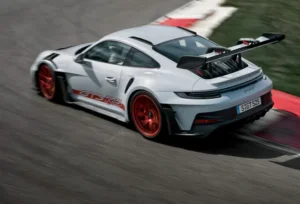
What truly separates the GT3 RS from other high-performance sports cars is its extraordinary aerodynamic package. Active aerodynamic elements, massive cooling ducts, functional vents, and an enormous rear wing work together to generate significant downforce at high speeds.
The chassis setup is equally advanced. Porsche integrates track-focused suspension tuning, rear-wheel steering, adaptive dampers, and sophisticated electronic differential systems to maximize grip and agility.
Horsepower and Acceleration
The 2026 Porsche 911 GT3 RS is expected to produce approximately 525 horsepower and around 343 lb-ft of torque.
Although some competitors offer higher horsepower figures, the GT3 RS compensates through lightweight engineering, aerodynamic efficiency, and astonishing chassis precision.
The car is expected to accelerate from 0 to 60 mph in approximately 3.0 seconds while reaching a top speed of nearly 185 mph.
However, raw acceleration numbers only tell part of the story. The GT3 RS truly shines during aggressive cornering and high-speed track driving, where its aerodynamics and suspension systems allow it to achieve incredible lap times.
The naturally aspirated engine also creates one of the most emotional soundtracks available in any modern performance car. The high-revving flat-six delivers a sharp, mechanical, race-inspired exhaust note that feels increasingly rare in today’s automotive landscape.
Fuel Economy
Fuel efficiency is understandably not the main priority of the 2026 Porsche 911 GT3 RS. Estimated EPA figures are expected to reach approximately 14 mpg in the city and 18 mpg on the highway.
Drivers purchasing a GT3 RS are far more likely to prioritize engine response, track capability, and driving engagement over fuel-saving technologies.
Still, Porsche’s lightweight construction methods and advanced engine management systems help the car remain relatively efficient considering its extreme performance capabilities.
Battery and Electric Range
The 2026 Porsche 911 GT3 RS is expected to remain a fully gasoline-powered sports car without hybrid assistance or electric driving capability.
Porsche intentionally preserves the purity and lightweight character of the GT3 RS by avoiding the additional weight associated with large battery systems.
This decision will likely satisfy traditional enthusiasts who value the direct connection and responsiveness of a naturally aspirated engine.
Driving Experience
The driving experience of the 2026 Porsche 911 GT3 RS is nothing short of extraordinary. This is a car engineered to deliver maximum precision and feedback at every speed.
Steering response feels immediate and incredibly detailed, allowing drivers to sense subtle changes in road surface and grip levels. The suspension setup is firm and uncompromising, but it contributes significantly to the car’s remarkable stability and cornering performance.
On a racetrack, the GT3 RS feels exceptionally focused and confidence-inspiring. Massive aerodynamic downforce keeps the car planted during high-speed corners, while the rear-engine layout provides incredible traction during acceleration.
Even on public roads, the car remains surprisingly manageable despite its extreme capabilities. However, the GT3 RS clearly prioritizes performance over comfort, making it less forgiving during everyday commuting compared to standard 911 models.
The braking system is equally impressive. Large carbon-ceramic brakes provide astonishing stopping power and exceptional resistance to fade under repeated heavy use.
Exterior Design
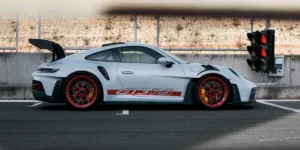
The exterior design of the 2026 Porsche 911 GT3 RS is heavily influenced by motorsport aerodynamics. Every vent, wing, intake, and body panel serves a functional purpose.
The massive swan-neck rear wing immediately dominates the rear profile, while large front air intakes and side cooling elements improve airflow and thermal management.
Lightweight materials such as carbon fiber are used extensively throughout the body structure to reduce overall weight and improve performance.
Compared to standard 911 models, the GT3 RS appears dramatically more aggressive and purposeful. Wider fenders, exposed aerodynamic components, center-lock wheels, and racing-inspired details give the car an unmistakably track-focused identity.
Interior and Technology
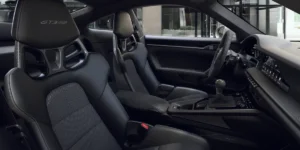
Inside, the 2026 Porsche 911 GT3 RS maintains a driver-focused cockpit with minimal distractions and premium motorsport-inspired materials.
Lightweight bucket seats, Alcantara surfaces, exposed carbon-fiber trim, and performance-oriented controls create an atmosphere centered entirely around driving.
Despite its track focus, the GT3 RS still includes modern technology features such as Porsche’s latest infotainment system, digital instrumentation, wireless smartphone connectivity, navigation, and advanced telemetry systems for track analysis.
The cabin feels premium without becoming overly luxurious or isolated from the driving experience. Every control is positioned carefully to maximize usability during high-performance driving situations.
Safety Features
The 2026 Porsche 911 GT3 RS includes several advanced safety and stability technologies designed to support both road and track driving.
Key Safety Technologies
- Adaptive stability management
- Traction control system
- Forward collision warning
- Automatic emergency braking
- Rear parking sensors
- Surround-view camera system
- Tire pressure monitoring
- Driver attention monitoring
- Advanced chassis stabilization systems
Porsche also incorporates sophisticated aerodynamic and chassis electronics that improve stability during aggressive cornering and emergency maneuvers.
Pros and Cons
Pros
- Exceptional track performance and handling precision
- High-revving naturally aspirated flat-six engine
- Incredible aerodynamic efficiency and downforce
- Outstanding steering feel and driver engagement
- Lightweight motorsport-inspired engineering
- One of the purest driving experiences available today
Cons
- Extremely expensive and difficult to obtain
- Firm suspension reduces daily comfort
- Limited practicality for everyday use
- No manual transmission option
- Road noise and stiffness may feel excessive for some drivers
Competitors
The 2026 Porsche 911 GT3 RS competes against some of the world’s most focused high-performance sports cars including the Mercedes-AMG GT Black Series, McLaren 750S, Lamborghini Huracán STO, Ferrari 296 GTB, and Chevrolet Corvette Z06.
However, few rivals combine track capability, engineering precision, reliability, and driver confidence as effectively as the GT3 RS.
Many enthusiasts consider the Porsche 911 GT3 RS the benchmark for road-legal track cars because of its incredible balance between aerodynamics, chassis tuning, and naturally aspirated performance.
Final Verdict
The 2026 Porsche 911 GT3 RS represents the ultimate expression of Porsche’s motorsport philosophy in a road-legal package. It is not designed to be the most comfortable sports car or the most luxurious grand tourer. Instead, it focuses entirely on delivering maximum driving precision and emotional connection.
For enthusiasts who value steering feel, high-revving engines, aerodynamic engineering, and track-ready performance, the GT3 RS remains one of the greatest driver’s cars ever produced.
Its naturally aspirated flat-six engine, race-inspired aerodynamics, and astonishing handling capabilities create an experience that few modern cars can replicate. The 2026 Porsche 911 GT3 RS is not simply fast — it feels engineered with obsessive attention to detail for drivers who genuinely love performance driving.
2026 Porsche 911 GT3 RS Images
Specifications
Specifications
| Production year | 2026 |
| Body type & seats | High-performance Sports Coupe, 2 seats |
| Dimensions | 4572 × 1900 × 1322 mm |
| Weight | Approx. 1,450 kg |
| Engine type | Naturally aspirated flat-6 petrol engine |
| Engine size & cylinders | 4.0-liter flat-6, 6 cylinders |
| Aspiration | Naturally aspirated |
| Power | 518 hp |
| Torque | 465 Nm |
| Transmission | 7-speed PDK automatic transmission |
| Drivetrain | Rear-wheel drive (RWD) |
| Acceleration (0-100 km/h) | 3.2 seconds |
| Top speed | 296 km/h |
| Fuel type | Premium gasoline |
| Fuel consumption | Approx. 13.0 L/100 km |
| Fuel tank capacity | 64 liters |
| Brakes | Porsche Ceramic Composite Brakes (PCCB) with ventilated discs |
| Steering | Electric power steering with rear-axle steering |
| Infotainment | 10.9-inch touchscreen display, digital instrument cluster, premium audio system, navigation system |
| Connectivity | Apple CarPlay, Bluetooth, USB-C ports, wireless smartphone connection, Wi-Fi support |
| Safety | Adaptive stability control, lane departure warning, automatic emergency braking, rearview camera, parking sensors, tire pressure monitoring system, traction control |
2026 Porsche 911 GT3 RS Price
 Price in USD
|
255,000 USD |
 Price in European Union
|
216,750 EUR |
 Price in United Kingdom
|
188,700 GBP |
 Price in Australia
|
390,150 AUD |
 Price in Canada
|
351,900 CAD |
 Price in India
|
22,261,500 INR |
 Price in China
|
1,830,900 CNY |
 Price in Indonesia
|
4,131,000,000 IDR |
 Price in Philippines
|
14,535,000 PHP |
 Price in Malaysia
|
1,076,100 MYR |
 Price in Nigeria
|
391,425,000 NGN |
 Price in Russia
|
20,517,300 RUB |
 Price in Pakistan
|
72,165,000 PKR |
 Price in Saudi Arabia
|
956,250 SAR |
 Price in Japan
|
37,485,000 JPY |
 Price in South Africa
|
4,498,200 ZAR |
 Price in Brazil
|
1,384,650 BRL |
 Price in Bangladesh
|
30,855,000 BDT |
 Price in Mexico
|
4,786,350 MXN |
More Products from Porsche