2029 Dacia Bridger : Price, Range, Specs, and Features
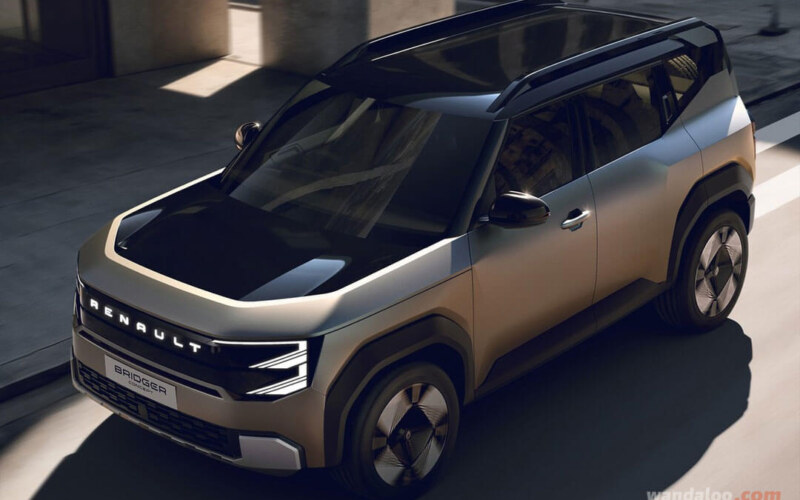
2029 Dacia Bridger arrives as one of the most intriguing affordable electric crossover projects expected from Dacia’s next-generation expansion plan. While Dacia has not officially released a production-ready Bridger under its own badge yet, Renault Group has already confirmed an aggressive electrification roadmap with four new Dacia EVs planned before 2030, alongside new compact SUV architectures designed for practical family mobility and low-cost ownership. 0 This places the Bridger in a very realistic position as a future budget-friendly electric adventure SUV aimed at buyers who want rugged styling without premium-brand pricing.
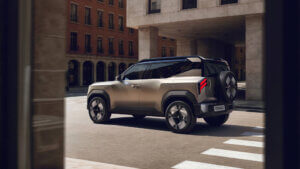
Positioned likely above the Dacia Spring and close to a compact B-SUV footprint, the 2029 Dacia Bridger is expected to borrow heavily from Renault’s recently unveiled Bridger Concept, a sub-4-meter crossover with bold proportions, SUV ground clearance, generous interior packaging, and multiple powertrain possibilities including full electric. 1 In classic Dacia fashion, the production Bridger would strip away unnecessary luxury while keeping the essentials that matter most to everyday drivers: range, practicality, durability, and value.
Estimated Price
Dacia’s strongest market weapon has always been affordability, and the 2029 Dacia Bridger should continue that tradition. Industry estimates place its expected starting price between $22,000 and $28,000 depending on battery size and trim level. That would make it one of the cheapest fully electric rugged-style SUVs available globally, significantly undercutting many mainstream EV crossovers while still offering more cabin versatility than city EV hatchbacks.
Battery, Driving Range, and Charging Time
The most probable battery setup for the Dacia Bridger would use Renault Group’s new affordable LFP battery technology, similar to the cost-focused battery strategy already confirmed for future entry-level electric vehicles. 2 Buyers can realistically expect two configurations:
- Standard Battery: around 35 kWh
- Long Range Battery: around 48–52 kWh
This should translate into an estimated WLTP driving range of:
- 220 miles (354 km) for the base model
- 300 miles (482 km) for the long-range version
Charging is expected to remain simple rather than ultra-fast. A 7.4 kW home AC charger would likely refill the battery overnight in roughly 6 to 8 hours, while DC fast charging could deliver 20% to 80% in approximately 30 to 38 minutes. For Dacia’s target customers, this is practical enough without inflating vehicle cost.
Performance and Driving Character
Do not expect sports-car acceleration here. The 2029 Dacia Bridger will likely focus on usable torque, urban confidence, and light off-road capability. Expected outputs may range between 95 hp and 140 hp, with electric instant torque making it feel quicker than the numbers suggest.
0–60 mph should land somewhere around 9 to 11 seconds depending on trim, which is perfectly acceptable for family crossover use. More importantly, the Bridger should offer:
- high seating visibility,
- smooth silent city driving,
- good suspension travel,
- and low running costs.
Early enthusiast discussions around the Bridger Concept have repeatedly highlighted its likely strength in cabin space and practical SUV stance rather than outright speed, which aligns perfectly with Dacia’s customer expectations. 3
Exterior Styling
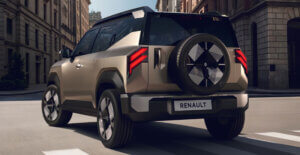
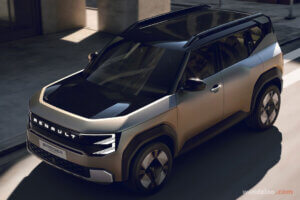
This may become one of Dacia’s coolest-looking EVs yet. Inspired by Renault’s Bridger show car, the production Dacia Bridger should feature:
- boxy mini-off-roader silhouette,
- wide wheel arches,
- muscular bumpers,
- upright front fascia,
- roof rails,
- and chunky protective cladding.
The visual formula combines urban crossover proportions with light expedition vibes. It looks tougher than the Dacia Spring and more youthful than traditional budget SUVs. Expect practical 17- or 18-inch aero wheels and Dacia’s new Y-shaped LED signature.
Cabin Interior and Practicality
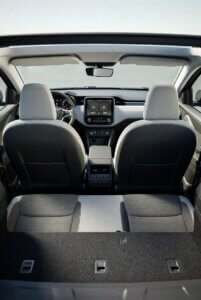
Dacia has learned that cheap no longer has to feel dull. The 2029 Bridger should deliver a minimalist but smart cabin using washable recycled materials, hard-wearing plastics, modular storage bins, and fold-flat rear seating.
Because Renault’s Bridger architecture emphasizes maximizing interior volume inside a compact footprint, rear passengers should enjoy surprisingly generous legroom while cargo space could reach approximately 380 to 420 liters. 4
Expect numerous clever practical details such as:
- multi-position boot floor,
- YouClip accessory mounts,
- USB-C charging points,
- deep door storage,
- and durable seat fabrics designed for family or outdoor use.
Infotainment and Technology
The infotainment setup will likely remain simple but modern:
- 10-inch central touchscreen,
- wireless Apple CarPlay and Android Auto,
- digital driver display,
- OTA software updates,
- connected navigation with EV charging planner.
Dacia will probably avoid expensive premium gimmicks, but the essentials should all be there. The user experience is expected to be functional, quick, and easy to understand.
Safety Technologies
Renault Group’s upcoming EV platforms are being developed with stricter modern safety standards, including improved battery thermal protection and mandatory driver assistance integration. 5 Therefore, the 2029 Dacia Bridger should include:
- automatic emergency braking,
- lane keeping assist,
- blind spot warning,
- rear parking sensors,
- adaptive cruise control on upper trims,
- multiple airbags and reinforced EV battery shielding.
Pros
- Very affordable electric SUV pricing
- Rugged and attractive boxy design
- Useful real-world driving range
- Excellent family practicality
- Low maintenance EV ownership costs
- Simple but modern infotainment
Cons
- No high-performance variant expected
- Charging speed likely average only
- Cabin materials will remain budget-focused
- Limited luxury features compared to rivals
Final Verdict
The 2029 Dacia Bridger has all the ingredients to become one of the smartest affordable electric SUVs of the decade. It will not be luxurious, and it will not be fast, but it could deliver exactly what the mass market increasingly wants: authentic SUV looks, useful EV range, family-friendly packaging, and an honest price tag. If Dacia successfully translates Renault’s Bridger Concept into production while preserving its low-cost DNA, this model could become a breakout global success for budget-conscious EV buyers who are tired of overpriced crossovers.
For reference on Renault Group’s official future EV strategy that underpins this model, see the Renault Group futuREady roadmap here: Renault Group Official Dacia Electrification Strategy.
2029 Dacia Bridger Images
Specifications
Specifications
| Production year | 2029 |
| Body type & seats | Compact SUV / 5 seats |
| Dimensions | 3.9 – 4.1 m length |
| Weight | 1150 – 1350 kg |
| Engine type | Petrol / Hybrid / Electric (EV possible) |
| Engine size & cylinders | 1.0L – 1.2L / 3 cylinders |
| Aspiration | Turbo / Mild Hybrid |
| Power | 90 – 130 hp |
| Torque | 160 – 220 Nm |
| Transmission | Manual / Automatic (CVT or 6AT) |
| Drivetrain | FWD (AWD optional) |
| Acceleration (0-100 km/h) | 10.5 – 13.5 sec |
| Top speed | 160 – 175 km/h |
| Fuel type | Petrol / Hybrid / EV |
| Fuel consumption | 4.5 – 6.5 L/100 km |
| Fuel tank capacity | 40 – 45 L (or battery ~40–55 kWh EV) |
| Brakes | Disc front / Drum rear + ABS |
| Steering | Electric (EPS) |
| Infotainment | 10" touchscreen |
| Connectivity | Apple CarPlay / Android Auto / Bluetooth |
| Safety | ABS, ESC, AEB, Lane Assist, Rear Camera, Airbags |
2029 Dacia Bridger Price
 Price in USD
|
30,000 USD |
 Price in European Union
|
25,500 EUR |
 Price in United Kingdom
|
22,200 GBP |
 Price in Australia
|
45,900 AUD |
 Price in Canada
|
41,400 CAD |
 Price in India
|
2,619,000 INR |
 Price in China
|
215,400 CNY |
 Price in Indonesia
|
486,000,000 IDR |
 Price in Philippines
|
1,710,000 PHP |
 Price in Malaysia
|
126,600 MYR |
 Price in Nigeria
|
46,050,000 NGN |
 Price in Russia
|
2,413,800 RUB |
 Price in Pakistan
|
8,490,000 PKR |
 Price in Saudi Arabia
|
112,500 SAR |
 Price in Japan
|
4,410,000 JPY |
 Price in South Africa
|
529,200 ZAR |
 Price in Brazil
|
162,900 BRL |
 Price in Bangladesh
|
3,630,000 BDT |
 Price in Mexico
|
563,100 MXN |
More Products from Dacia