Dacia Duster Facelift 2028 : Price, Specs, Interior & Release Date
Dacia Duster Facelift 2028 speculation has been building steadily among European Dacia watchers, even though it’s worth being upfront from the start: Dacia hasn’t officially confirmed a facelift for this specific year. What we can say with confidence is that the timing lines up neatly with the brand’s own history — the outgoing second-generation Duster launched in 2017 and received its own mid-cycle refresh in 2021, almost exactly four years later. Since the current third-generation Duster arrived in late 2023 and went on sale through 2024, a facelift landing around 2028 would follow that same well-established pattern. This look at the Dacia Duster Facelift 2028 covers what’s realistically expected, based on the current car’s proven formula and Dacia’s typical approach to mid-cycle updates.
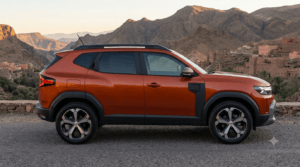
Dacia Duster Facelift 2028: Overview
The Dacia Duster Facelift 2028 would apply to the third-generation Duster, which switched the nameplate onto the modern CMF-B platform shared with the Renault Clio, Captur, and Dacia’s own Sandero, Jogger, and Bigster models. That platform change already brought a significant leap in refinement, safety, and technology over the outgoing generation, meaning any facelift wouldn’t need to reinvent the car so much as sharpen what’s already working well.
Anyone researching the Dacia Duster Facelift 2028 should treat specific details with appropriate caution, since Dacia typically doesn’t confirm mid-cycle update specifics until roughly a year or so before launch. What follows is a reasonable expectation built from the current Duster’s proven engine lineup, Dacia’s historical facelift patterns, and the brand’s stated priorities around affordability and simplicity.
Dacia Duster Facelift 2028: Expected Price
Official pricing for the Dacia Duster Facelift 2028 obviously doesn’t exist yet, but the current Duster lineup offers a useful baseline. Today’s Essential trim, available exclusively with the Bi-Fuel petrol and LPG engine, starts at approximately £18,745 in the UK, while range-topping Extreme trim petrol models span from around £23,735 to £26,745 depending on drivetrain. Given typical inflation-driven price increases and Dacia’s historically modest approach to facelift-related price hikes, a 2028 update would likely nudge these figures up by a few hundred pounds rather than introduce any dramatic repricing.
What’s unlikely to change is Dacia’s fundamental value positioning. The brand has built its entire identity around undercutting mainstream rivals by a significant margin, and there’s little reason to expect the Dacia Duster Facelift 2028 to abandon that strategy, even as the car gains updated technology and styling.
Dacia Duster Facelift 2028 Estimated Pricing (Based on Current Lineup)
- Essential (Bi-Fuel petrol/LPG): likely starting somewhat above the current £18,745
- Expression (TCe 130 petrol): modest increase over current mid-range pricing
- Extreme (top trim): likely starting somewhat above the current £23,735 to £26,745 range
Dacia Duster Facelift 2028: Release Date
Based on the roughly four-year gap between the outgoing generation’s 2017 launch and its 2021 facelift, a 2028 update for the current Duster would fit Dacia’s established rhythm almost perfectly, given the car’s late-2023 to 2024 introduction. That said, until Dacia issues an official announcement, this timing should be treated as an educated projection rather than a confirmed release date, and interested buyers should watch for official confirmation as the year approaches.
Dacia Duster Facelift 2028: Engine and Performance
The current Duster lineup offers a straightforward set of petrol and hybrid options that would likely carry the Dacia Duster Facelift 2028 forward largely unchanged, given how recently this powertrain lineup was introduced. That includes the TCe 100 Bi-Fuel, a 1.0-liter three-cylinder turbo engine producing around 99 horsepower and capable of running on either petrol or LPG, and the TCe 130, a 1.2-liter turbocharged four-cylinder with mild-hybrid assistance producing approximately 130 horsepower, available with front- or all-wheel drive.
At the top of the range sits the Hybrid 140, pairing a 1.6-liter engine with electric motor assistance for a combined 140 horsepower, offering meaningfully reduced fuel consumption in city driving. A facelift would most plausibly bring efficiency refinements and updated emissions compliance to this existing engine lineup rather than introducing entirely new powertrains, consistent with how Dacia approached its 2021 mid-cycle Duster update.
Dacia Duster Facelift 2028 Off-Road Capability
Any facelift would almost certainly preserve the current Duster’s genuine off-road credentials, which include 8.5 inches of ground clearance on all-wheel-drive models, a 31-degree approach angle, and a 36-degree departure angle. These figures have been central to the Duster’s identity as an affordable, capable SUV, and there’s little commercial reason for Dacia to compromise them in pursuit of styling changes.
Dacia Duster Facelift 2028: Horsepower and Acceleration
Given that the Dacia Duster Facelift 2028 would most likely retain the current engine lineup with only minor efficiency tweaks, acceleration figures should stay broadly similar to today’s Duster. The entry-level TCe 100 Bi-Fuel’s 99 horsepower prioritizes affordability and efficiency over outright speed, while the TCe 130 offers noticeably more confident acceleration for buyers who want a more relaxed driving experience, particularly in front-wheel-drive form where there’s less weight to move.
The Hybrid 140’s combined 140 horsepower, aided by its electric motor’s instant torque, would likely remain the quickest standard configuration in any facelifted lineup, continuing to offer the most responsive low-speed acceleration thanks to its electrified assistance.
Dacia Duster Facelift 2028: Fuel Consumption
Fuel efficiency has always been one of the Duster’s strongest selling points, and any Dacia Duster Facelift 2028 would likely build on that reputation rather than compromise it. The current Hybrid 140 already reduces fuel consumption by up to 40 percent in city driving compared to non-hybrid alternatives, while the Bi-Fuel TCe 100’s dual petrol-and-LPG tanks offer a combined range approaching 870 miles between fill-ups.
A mid-cycle update would plausibly bring modest further efficiency gains through software and calibration refinements, following the pattern of most manufacturer facelifts, though dramatic changes to fuel economy seem unlikely given how recently this powertrain lineup was introduced on the current CMF-B-based generation.
Dacia Duster Facelift 2028: Driving Experience
The current, third-generation Duster already earned praise for meaningfully improved ride comfort and steering precision compared to its predecessor, thanks to the switch to the modern CMF-B platform. Any Dacia Duster Facelift 2028 would most likely focus on preserving and refining that driving character rather than overhauling it, since the current chassis has been well received by reviewers and owners alike.
Dacia’s approach to facelifts has historically prioritized visual and technology updates over chassis changes, meaning buyers should expect the fundamental driving experience — comfortable, predictable, and honestly focused on practicality over outright engagement — to remain largely consistent with today’s Duster.
Dacia Duster Facelift 2028 Driving Modes
The current Duster’s five driving modes — Auto, Snow, Mud/Sand, Off-Road, and Eco — along with its downhill speed control system, represent genuinely useful features that any facelift would be expected to retain, given how central they are to the Duster’s off-road-capable identity.
Dacia Duster Facelift 2028: Exterior Design
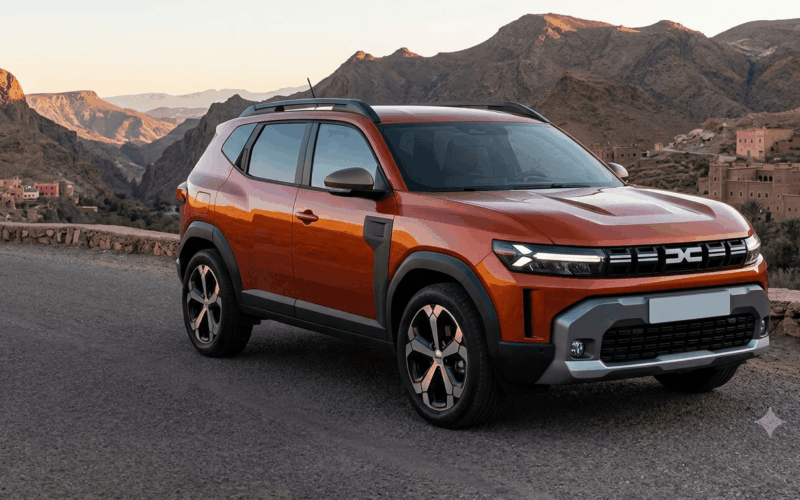
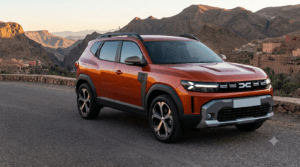
Industry speculation and spy-shot discussions suggest the Dacia Duster Facelift 2028 could adopt styling cues inspired by the larger Bigster, Dacia’s newer compact crossover that shares the same platform. That would likely mean a refreshed grille with a more textured, premium-looking finish, updated skid plate detailing, new wheel designs, and mild bumper reshaping for improved aerodynamics, while preserving the boxy, muscular silhouette that’s central to the Duster’s rugged appeal.
The current generation’s distinctive Y-shaped LED lighting signature, used across the headlights and taillights, would likely continue in some form, since it’s become a genuine visual signature for the model. Any updates would most plausibly refine rather than replace that design language, consistent with how Dacia handled the second generation’s 2021 facelift.
Dacia Duster Facelift 2028: Interior and Technology
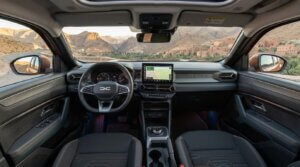
Inside, a Dacia Duster Facelift 2028 would most likely bring a modernized dashboard and updated infotainment software, continuing the steady technology improvements Dacia has made across its recent model updates. The current Duster’s cabin already benefits considerably from the CMF-B platform’s improved noise insulation and material quality compared to the outgoing generation, and a facelift would likely build on that foundation with incremental refinements rather than a wholesale redesign.
Given Dacia’s consistent emphasis on keeping options lists simple and understandable, buyers should expect any updated technology to remain straightforward and genuinely useful rather than needlessly complex, in keeping with the brand’s core value proposition.
Dacia Duster Facelift 2028: Safety Systems
The current Duster already includes safety equipment mandated by updated European regulations, including automatic emergency braking, speed-limit recognition, and lane departure prevention, all built into the CMF-B platform from the ground up. A facelift would likely maintain and potentially expand this equipment as European safety standards continue to evolve, though specific details remain unconfirmed at this stage.
Buyers wanting the latest independent crash-test results for the current Duster generation, which would likely carry over into any facelifted version, can consult Euro NCAP for up-to-date safety ratings.
Dacia Duster Facelift 2028: Pros and Cons
What We Expect to Like About the Dacia Duster Facelift 2028
✓ Likely continuation of exceptional value relative to rivals
✓ Proven, efficient engine lineup expected to carry over
✓ Genuine off-road capability likely preserved
✓ Anticipated styling refresh inspired by the larger Bigster
✓ Modernized technology without unnecessary complexity
What Remains Uncertain About the Dacia Duster Facelift 2028
✗ No official confirmation exists yet from Dacia
✗ Exact pricing and specifications remain speculative
✗ Release timing is an educated projection, not a confirmed date
✗ Still unlikely to be sold in the United States market
Dacia Duster Facelift 2028: Main Competitors
Whenever it arrives, a facelifted Duster would continue competing primarily against small and compact SUVs in the budget and mainstream European segments, including Volkswagen Polo-based crossovers and larger models like the Skoda Kamiq. Within Dacia’s own price bracket, few rivals currently offer the same combination of interior space, simplicity, and low running costs that’s made the Duster one of Europe’s best-selling SUVs.
A 2028 facelift would need to maintain that value gap against increasingly capable budget-focused rivals, particularly as competitors continue investing in their own mainstream crossover offerings to compete more directly with Dacia’s growing market share.
Dacia Duster Facelift 2028: Final Verdict
While the Dacia Duster Facelift 2028 remains unconfirmed and should be treated as informed speculation rather than settled fact, the timing, based on Dacia’s own facelift history, and the direction, based on the brand’s recent design language across the Bigster and updated Sandero, both point toward a sensible, evolutionary update rather than a dramatic reinvention. That’s likely exactly what a car this successful actually needs.
Until Dacia makes an official announcement, prospective buyers are better served focusing on the current, third-generation Duster, which already delivers the value, capability, and simplicity that’s made this nameplate such a consistent European sales success. Whenever the Dacia Duster Facelift 2028 does officially arrive, it will most likely refine that winning formula rather than reinvent it.
Dacia Duster Facelift 2028 Images
Specifications
Specifications
| Production year | 2028 |
| Body type & seats | Compact SUV, 5 Seats |
| Dimensions | 4,350 × 1,813 × 1,660 mm |
| Weight | 1,350–1,500 kg |
| Engine type | Turbocharged Petrol / Mild-Hybrid Petrol |
| Engine size & cylinders | 1.2L I3 / 1.3L I4 |
| Aspiration | Turbocharged |
| Power | 120–150 hp |
| Torque | 197–250 Nm |
| Transmission | 6-Speed Manual / Automatic |
| Drivetrain | FWD / 4WD |
| Acceleration (0-100 km/h) | 9.5–11.5 sec (estimated) |
| Top speed | 180–195 km/h (estimated) |
| Fuel type | Gasoline |
| Fuel consumption | 5.5–7.0 L/100 km (estimated) |
| Fuel tank capacity | 50 L |
| Brakes | Ventilated Front Disc Brakes / Rear Disc Brakes |
| Steering | Electric Power Steering |
| Infotainment | 10.1-inch Touchscreen, Digital Instrument Display |
| Connectivity | Apple CarPlay, Android Auto, Bluetooth, USB-C, Wireless Connectivity |
| Safety | Automatic Emergency Braking, Lane Keep Assist, Blind Spot Warning, Traffic Sign Recognition, Rear Camera, Parking Sensors, Multiple Airbags, TPMS |
Dacia Duster Facelift 2028 Price
 Price in USD
|
25,000 USD |
 Price in European Union
|
21,250 EUR |
 Price in United Kingdom
|
18,500 GBP |
 Price in Australia
|
38,250 AUD |
 Price in Canada
|
34,500 CAD |
 Price in India
|
2,182,500 INR |
 Price in China
|
179,500 CNY |
 Price in Indonesia
|
405,000,000 IDR |
 Price in Philippines
|
1,425,000 PHP |
 Price in Malaysia
|
105,500 MYR |
 Price in Nigeria
|
38,375,000 NGN |
 Price in Russia
|
2,011,500 RUB |
 Price in Pakistan
|
7,075,000 PKR |
 Price in Saudi Arabia
|
93,750 SAR |
 Price in Japan
|
3,675,000 JPY |
 Price in South Africa
|
441,000 ZAR |
 Price in Brazil
|
135,750 BRL |
 Price in Bangladesh
|
3,025,000 BDT |
 Price in Mexico
|
469,250 MXN |
More Products from Dacia