2026 Chevrolet Blazer Review: Price, Specs, Interior & Performance
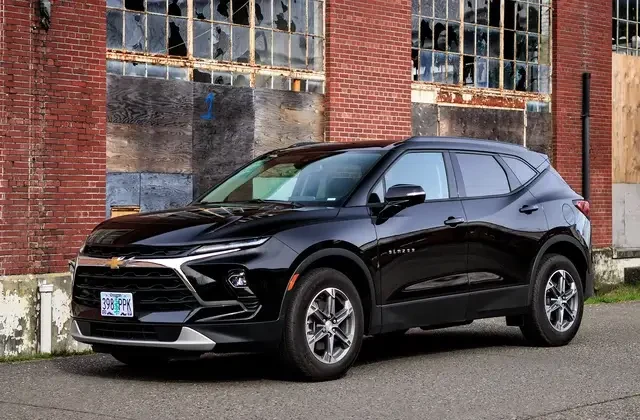
2026 Chevrolet Blazer Review coverage arrives with a genuinely unexpected backstory: this gasoline-powered midsize crossover was originally slated for discontinuation after the 2025 model year, with Chevrolet planning to let the Blazer nameplate live on solely through its electric counterpart. GM reversed that decision, and the 2026 Chevrolet Blazer returns to showrooms with a streamlined trim lineup, additional standard safety equipment, and confirmation that production will continue through at least 2030. This 2026 Chevrolet Blazer Review covers everything worth knowing about this surprising, second-life model year.
2026 Chevrolet Blazer Review: Overview
The 2026 Chevrolet Blazer represents the eighth model year of the current fifth generation, which first launched back in 2019. It’s worth clarifying up front that this gasoline-powered Blazer is a distinct vehicle from the separately sold, fully electric Blazer EV, and this 2026 Chevrolet Blazer Review focuses specifically on the traditional gas-engine crossover rather than its battery-powered sibling.
After GM’s initial plan to discontinue the gas Blazer following the 2025 model year, the automaker changed course, and Chevrolet dealers now confirm this nameplate will continue with running updates through the 2027 model year and beyond, with production scheduled to continue until 2030. Anyone reading a 2026 Chevrolet Blazer Review before making a purchase decision should appreciate that this represents a genuine reprieve for a nameplate that nearly disappeared from Chevrolet’s gasoline lineup entirely.
2026 Chevrolet Blazer Review: Expected Price
Pricing for the 2026 Chevrolet Blazer starts at $36,095 for the base 2LT trim with front-wheel drive, actually $1,000 cheaper than the equivalent 2025 model despite now including the Driver Confidence Package as standard equipment. The 3LT trim starts at $41,495, a modest $500 increase over last year, while the sporty RS trim opens at $45,395. Adding all-wheel drive raises the price by $2,700 to $2,900 depending on trim, with a fully loaded RS AWD reaching toward the upper end of the lineup’s price range.
Buyers who specifically want the optional V6 engine should factor that into their 2026 Chevrolet Blazer Review research quickly, since forum discussion and dealer commentary suggest this could be among the final opportunities to get a V6-powered Blazer before the engine potentially disappears from the lineup in future model years.
2026 Chevrolet Blazer Trim Pricing
- 2LT (FWD): from $36,095
- 2LT (AWD): from approximately $38,795 to $38,995
- 3LT (FWD): from $41,495
- 3LT (AWD): from approximately $44,195 to $44,395
- RS (FWD): from $45,395
- RS (AWD): from approximately $48,095 to $48,295
2026 Chevrolet Blazer Review: Release Date
The 2026 Chevrolet Blazer is currently available at Chevrolet dealerships nationwide, built at GM’s Ramos Arizpe plant in Mexico on the automaker’s C1 platform. Given the confirmation that this generation will continue through 2030, buyers can expect steady, ongoing availability rather than the kind of uncertain supply that sometimes accompanies a nameplate rumored for discontinuation.
2026 Chevrolet Blazer Review: Engine and Performance
The 2026 Chevrolet Blazer is powered by a turbocharged 2.0-liter four-cylinder engine as standard equipment across every trim, including the sporty RS, which now comes with this engine standard rather than the V6 it once featured. This engine produces 228 horsepower and 258 pound-feet of torque, paired with a 9-speed automatic transmission.
Buyers wanting more power can still option a 3.6-liter V6 producing 308 horsepower and 270 pound-feet of torque, though it’s now available exclusively on the RS trim, having been discontinued as an option for the 3LT. Front-wheel drive comes standard across the lineup, with all-wheel drive available on every trim for buyers who want added traction.
2026 Chevrolet Blazer RS All-Wheel-Drive System
The RS trim features a trim-exclusive all-wheel-drive system, distinguishing it mechanically from the AWD setups offered on the 2LT and 3LT trims. Combined with its standard 20-inch wheels and sportier suspension tuning, the RS remains positioned as the performance-oriented flagship within the 2026 Chevrolet Blazer lineup.
2026 Chevrolet Blazer Review: Horsepower and Acceleration
With 228 horsepower from the standard turbocharged four-cylinder, the 2026 Chevrolet Blazer delivers confident, everyday acceleration well suited to a midsize crossover. Reviewers have consistently praised the Blazer’s sharp handling and generally strong performance characteristics relative to its segment, even with the standard engine.
Buyers who option the available 308-horsepower V6 on the RS trim gain a genuinely noticeable step up in acceleration and overall power delivery, giving that configuration a meaningfully sportier character than the four-cylinder-only trims, at least while the V6 remains available.
2026 Chevrolet Blazer Review: Fuel Consumption
Fuel economy for the 2026 Chevrolet Blazer comes in at approximately 22 mpg city and 29 mpg highway for front-wheel-drive models equipped with the standard turbocharged four-cylinder engine, respectable figures for a midsize crossover in this class. All-wheel-drive models and those equipped with the optional V6 should expect a modest efficiency decrease compared to those baseline front-wheel-drive figures.
Reviewers have rated the Blazer’s fuel efficiency at a solid 7 out of 10 relative to segment competitors, suggesting genuinely competitive, if not class-leading, fuel economy for buyers cross-shopping this vehicle against other midsize crossovers.
2026 Chevrolet Blazer Review: Driving Experience
Behind the wheel, the 2026 Chevrolet Blazer continues to deliver the sharp, engaging handling that’s helped distinguish it from more conservatively tuned rivals in the midsize crossover segment. Independent reviewers have consistently praised the Blazer’s driving dynamics, awarding it strong marks for performance relative to its competitive set.
The tech-savvy cabin and user-friendly infotainment system further contribute to a driving experience that feels genuinely modern, despite this generation now entering its eighth model year on the market. That combination of sharp handling and up-to-date technology has helped the Blazer maintain a loyal following even amid its earlier discontinuation scare.
2026 Chevrolet Blazer Seating Configuration
The 2026 Chevrolet Blazer offers a single seating configuration across the lineup, featuring two front bucket seats paired with a 60/40-split bench seat in the second row, resulting in seating for five passengers total. That two-row, five-seat layout keeps the Blazer positioned as a more style-focused alternative to larger three-row crossovers within Chevrolet’s broader SUV lineup.
2026 Chevrolet Blazer Review: Exterior Design
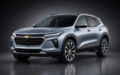
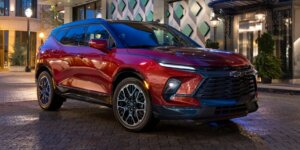
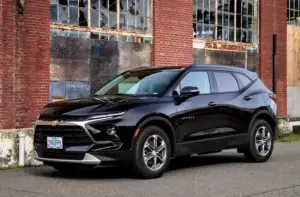
Visually, the 2026 Chevrolet Blazer continues to showcase the swoopy, coupe-inspired styling that’s defined this generation since 2019, earning particularly strong marks from reviewers for its exterior design. The 2LT trim comes standard with 18-inch wheels, LED headlights, and LED taillights, while the RS trim steps up to 20-inch wheels alongside distinctive black exterior accents that give it a more aggressive, performance-oriented look.
Given the Blazer’s strong reputation for styling, it’s little surprise that GM ultimately reversed its discontinuation plans, recognizing the nameplate’s continued visual appeal within an increasingly crowded midsize crossover segment.
2026 Chevrolet Blazer Review: Interior and Technology
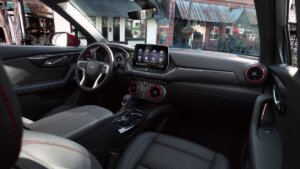
Inside, the 2026 Chevrolet Blazer offers a genuinely tech-forward cabin experience, with the 2LT trim including a 10-inch touchscreen, wireless Apple CarPlay and Android Auto compatibility, and a six-speaker audio system as standard equipment. Keyless entry and start, heated front seats, and a power driver’s seat round out the base trim’s standard features.
Stepping up to the 3LT adds leather seating, heated mirrors with integrated turn signals, and a power liftgate, along with rear parking sensors, blind-spot warning, and rear cross-traffic alert as standard equipment. An available Sound & Technology package further enhances the 3LT’s cabin experience for buyers who want additional upgrades beyond the standard equipment list.
2026 Chevrolet Blazer Review: Safety Systems
A meaningful update for this model year is the inclusion of the Driver Confidence Package as standard equipment on the base 2LT trim, bringing forward collision warning, automatic emergency braking, and lane-keep assist to every 2026 Chevrolet Blazer regardless of trim level. Adaptive cruise control, a safety alert seat, and a surround-view camera remain available on higher trims for buyers who want additional driver-assistance technology.
Buyers wanting independent, up-to-date crash-test data can check the Insurance Institute for Highway Safety (IIHS), which regularly evaluates midsize crossovers including the Blazer alongside its closest rivals.
2026 Chevrolet Blazer Review: Pros and Cons
What We Like About the 2026 Chevrolet Blazer
✓ Standout exterior styling within the midsize crossover segment
✓ Driver Confidence Package now standard even on the base trim
✓ Sharp, engaging handling praised by independent reviewers
✓ Confirmed production continuing through at least 2030
✓ Genuinely tech-forward cabin with wireless smartphone integration
What Could Be Better on the 2026 Chevrolet Blazer
✗ V6 engine now limited to the RS trim only
✗ Streamlined trim lineup offers fewer configuration choices
✗ Seating limited to five passengers across a single layout
✗ V6 availability may not continue in future model years
2026 Chevrolet Blazer Review: Main Competitors
The 2026 Chevrolet Blazer competes in one of the most crowded segments in the midsize crossover market. The Ford Edge and Honda Passport offer similarly styled, two-row alternatives with their own take on sporty crossover design. The Toyota Highlander and Hyundai Santa Fe round out the competitive field, though both lean more toward practicality and three-row versatility than the Blazer’s coupe-inspired, style-focused approach.
Against this field, the 2026 Chevrolet Blazer continues to distinguish itself through its sharp handling, distinctive exterior design, and now, a newly expanded standard safety package that helps it compete more directly against rivals that have long offered more generous base-level equipment.
2026 Chevrolet Blazer Review: Final Verdict
Given its unexpected reprieve from discontinuation, the 2026 Chevrolet Blazer makes a genuinely compelling case for itself within the midsize crossover segment. The combination of sharp handling, distinctive styling, and newly standard safety technology gives buyers real reasons to consider this nameplate, especially now that its long-term future through 2030 has been confirmed.
The trade-offs are relatively minor: the V6 engine has been pushed exclusively to the RS trim, and the overall trim lineup has been streamlined compared to previous years. Even so, anyone finishing this 2026 Chevrolet Blazer Review looking for a bottom line will find a genuinely stylish, well-rounded midsize crossover that’s earned a second chance in Chevrolet’s gasoline lineup — and appears determined to make the most of it.
2026 Chevrolet Blazer Review Images
Specifications
Specifications
| Production year | 2026 |
| Body type & seats | Midsize SUV, 5 Seats |
| Dimensions | 4,869 × 1,902 × 1,701 mm |
| Weight | 1,850–1,950 kg |
| Engine type | Turbocharged Petrol |
| Engine size & cylinders | 2.0L Turbo I4 / 3.6L V6 |
| Aspiration | Turbocharged |
| Power | 228–308 hp |
| Torque | 349–366 Nm |
| Transmission | 9-Speed Automatic |
| Drivetrain | FWD / AWD |
| Acceleration (0-100 km/h) | 6.0–7.5 sec (estimated) |
| Top speed | 210 km/h (approx.) |
| Fuel type | Gasoline |
| Fuel consumption | 8.5–10.5 L/100 km |
| Fuel tank capacity | 73 L |
| Brakes | Ventilated Disc Brakes, ABS |
| Steering | Electric Power Steering |
| Infotainment | 17.7-inch Chevrolet Infotainment Display, Digital Driver Information Center |
| Connectivity | Apple CarPlay, Android Auto, Bluetooth, USB-C, Wireless Charging, Wi-Fi Hotspot |
| Safety | Automatic Emergency Braking, Forward Collision Alert, Lane Keep Assist, Blind Spot Monitoring, Rear Cross Traffic Alert, Rear Camera, Parking Sensors, Multiple Airbags, TPMS |
2026 Chevrolet Blazer Review Price
 Price in USD
|
35,000 USD |
 Price in European Union
|
29,750 EUR |
 Price in United Kingdom
|
25,900 GBP |
 Price in Australia
|
53,550 AUD |
 Price in Canada
|
48,300 CAD |
 Price in India
|
3,055,500 INR |
 Price in China
|
251,300 CNY |
 Price in Indonesia
|
567,000,000 IDR |
 Price in Philippines
|
1,995,000 PHP |
 Price in Malaysia
|
147,700 MYR |
 Price in Nigeria
|
53,725,000 NGN |
 Price in Russia
|
2,816,100 RUB |
 Price in Pakistan
|
9,905,000 PKR |
 Price in Saudi Arabia
|
131,250 SAR |
 Price in Japan
|
5,145,000 JPY |
 Price in South Africa
|
617,400 ZAR |
 Price in Brazil
|
190,050 BRL |
 Price in Bangladesh
|
4,235,000 BDT |
 Price in Mexico
|
656,950 MXN |
More Products from Chevrolet