- Home
- Volkswagen
- 2027 Volkswagen Amarok
2027 Volkswagen Amarok: Price, Towing Capacity, Specs, and Review
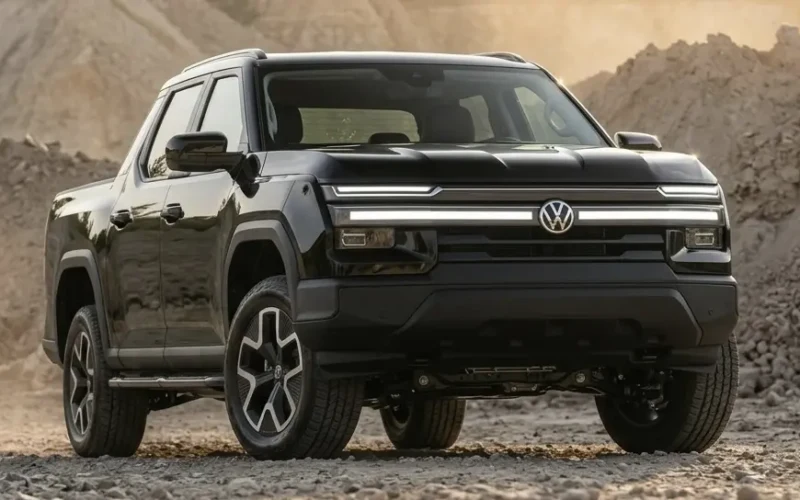
2027 Volkswagen Amarok is having what can only be described as a defining year — and it’s happening on two fronts simultaneously. In global markets like Australia, Europe, and the Middle East, the second-generation Amarok is hitting its stride with the arrival of the performance-focused W600 Walkinshaw edition, arguably the most driver-centric pickup truck the nameplate has ever produced. Meanwhile, in South America, an entirely new third-generation Amarok is taking shape — one that ditches the Ford Ranger platform entirely and charts an independent course with a $580 million investment behind it. The Amarok story in 2027 is, in other words, anything but simple.
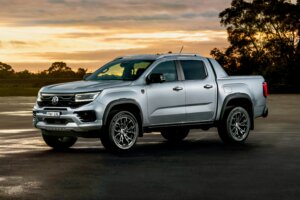
2027 Volkswagen Amarok: Overview of a Nameplate at a Crossroads
The Volkswagen Amarok has always punched above its weight in the pickup segment. When it launched in 2010, it brought car-like refinement and premium interior quality to a category that had long been dominated by utilitarian thinking. The second generation, introduced in 2022, deepened that commitment by sharing its platform with the Ford Ranger — gaining proven mechanical reliability and a wider powertrain range while adding distinctly Volkswagen-flavored interior sophistication and technology.
By 2027, the second-generation 2027 Volkswagen Amarok has evolved further still. Volkswagen Australia has trimmed the lineup, dropping the Core and Life entry-level variants and making the Style trim the new starting point — a deliberate move upmarket that reflects where genuine Amarok buyers actually sit. More importantly, the W600 Walkinshaw edition has arrived to serve as the halo model: a performance-tuned dual-cab that sets out to prove a pickup truck can be as rewarding to drive on road as any performance SUV.
2027 Volkswagen Amarok Release Date and Market Availability
The 2027 Volkswagen Amarok W600 is launching in Australia in August 2026, with deliveries rolling into the 2027 model year across key markets including South Africa and select European countries. The standard second-generation Amarok lineup — Style, PanAmericana, and Aventura trims — remains on sale globally and continues to be built at the Ford plant in Silverton, South Africa.
Separately, the all-new third-generation Amarok for the South American market is targeted for production from 2027 at the Pacheco plant in Argentina. That model — developed in partnership with China’s SAIC Group and based on the Maxus Interstellar X platform — is intended exclusively for South American tastes and markets, and will not replace the globally available Ranger-based Amarok in markets like Australia or Europe. According to CarExpert, Volkswagen has explicitly confirmed this parallel strategy to ensure sufficient supply of the global Amarok from the South African plant while launching the separate regional model from Argentina.
2027 Volkswagen Amarok Price: What You’ll Pay
The 2027 Volkswagen Amarok range in Australia currently tops out at $82,990 for the Aventura — the brand’s previous range-topper — before the W600 enters the equation. The W600 Walkinshaw edition is expected to land somewhere north of that figure, with estimates placing it between $90,000 and $100,000 before on-road charges. That positions it squarely against the Ford Ranger Raptor ($90,690), though the two take dramatically different approaches: the Raptor is built for off-road theatrics; the W600 is engineered for on-road precision and genuine driver engagement.
In European markets, the 2027 Volkswagen Amarok continues to be priced competitively against the Toyota Hilux and Isuzu D-Max, with Style-grade double-cab models starting from approximately £38,000–£42,000 depending on powertrain. The V6 TDI variants command the expected premium, but represent some of the strongest value in the segment given their towing and performance credentials.
Engine and Performance of the 2027 Volkswagen Amarok
2027 Volkswagen Amarok Powertrain Options
The 2027 Volkswagen Amarok is available with four distinct powertrain configurations, covering everything from economy-focused fleet use to V6 performance driving. At the entry level, the 2.0-litre four-cylinder turbo-diesel produces 125kW and 405Nm — adequate for general duties but clearly designed with payload and economy in mind rather than enthusiasm. The twin-turbo 2.0-litre four-cylinder steps things up meaningfully to 154kW and 500Nm, offering a genuinely useful spread of torque that handles towing duties with composure.
The V6 TDI: Heart of the 2027 Volkswagen Amarok Lineup
The engine that defines the 2027 Volkswagen Amarok range is the 3.0-litre V6 turbo-diesel, producing 184kW and a substantial 600Nm of torque. Available in Style, PanAmericana, Aventura, and W600 trims, this engine transforms the Amarok from a capable workhorse into something approaching a premium long-distance vehicle. Paired with a Ford-sourced 10-speed automatic transmission and a permanent 4×4 system, the V6 TDI pulls from low revs with real authority, making light work of both heavy towing and open-road cruising.
Topping the lineup is the 2.3-litre turbocharged petrol engine, exclusive to the Aventura TSI grade, producing 222kW and 452Nm. It’s the most powerful combustion option in the range and appeals to buyers who prioritize performance over the V6 diesel’s superior torque and economy profile.
Horsepower, Acceleration, and Towing Capacity
The 2027 Volkswagen Amarok V6 W600’s 184kW output (approximately 247 horsepower) may sound conservative on paper, but the 600Nm torque figure tells a more accurate story. The 3500kg braked towing capacity and approximately 1,000kg payload capacity make it one of the most practically capable vehicles in its class, while the W600’s Walkinshaw-tuned suspension ensures that carrying or towing that weight doesn’t reduce the driving experience to a white-knuckle endurance test.
Fuel Consumption of the 2027 Volkswagen Amarok
The 2027 Volkswagen Amarok V6 TDI returns fuel economy figures in the 9.0–11.0L/100km range under real-world mixed driving conditions — a respectable result for a vehicle of this size, weight, and capability. The twin-turbo 2.0-litre diesel manages slightly better economy in more typical usage, making it a sensible choice for buyers whose priorities lean toward daily commuting over heavy hauling. The petrol Aventura TSI, predictably, uses more fuel, typically returning 12.0–14.0L/100km in mixed use. None of these are the kind of numbers you’d frame on a wall, but they sit well within expectations for the class and the purpose.
Battery and Electric Future: What the 2027 Volkswagen Amarok Offers
The globally available 2027 Volkswagen Amarok does not currently offer a plug-in hybrid or fully electric powertrain — a gap that becomes more noticeable as rivals begin exploring electrification. The South American third-generation model, however, tells a more forward-looking story: the SAIC-based Maxus platform underpinning that variant is already available in electric form as the Maxus eTerron 9, featuring a 102kWh lithium iron phosphate battery with up to 430km of WLTP-rated electric range and dual-motor all-wheel drive producing up to 325kW.
A plug-in hybrid variant of the Terron 9 platform is also confirmed for Australia from 2027, suggesting that electrification is coming to the Amarok family — it’s a question of which market gets there first and under which name. For buyers in Europe and Australia waiting for an electric or hybrid Amarok from Volkswagen’s global lineup, patience will be required. But the infrastructure, the platform technology, and the corporate intent are clearly in place.
Driving the 2027 Volkswagen Amarok: On-Road and Off-Road Experience
The standard 2027 Volkswagen Amarok has always distinguished itself from rivals through a more car-like on-road demeanor. The suspension is tuned for comfort on sealed roads, the steering has more weight and precision than the typical pickup offers, and the interior refinement makes extended motorway stints genuinely pleasant rather than something to be endured. Off-road, the PanAmericana variant adds a rear locking differential, underride guard, and off-road suspension tuning — enough capability to handle demanding terrain without transforming the vehicle into an extreme off-roader.
The W600 Walkinshaw takes on-road dynamics to an entirely different level. Walkinshaw fitted bespoke Koni dampers — units that combine elements of Koni’s FSD and Raid product lines, tuned specifically for this application — alongside a 22mm rear anti-roll bar that the standard Amarok’s Ranger-derived platform entirely lacks. The 20×10-inch alloy wheels wrapped in 285/50R20 Michelin Pilot Sport 4 SUV tyres complete the transformation. The result is a dual-cab pickup that changes direction with genuine commitment, maintains composure through corners that would upset the standard vehicle, and communicates what it’s doing through the steering in a way that’s genuinely engaging. That 3500kg towing capacity remains intact. It’s a remarkable engineering achievement for what is fundamentally a body-on-frame truck.
Exterior Design of the 2027 Volkswagen Amarok
The second-generation 2027 Volkswagen Amarok wears a design that reads as unmistakably Volkswagen without mimicking the softer lines of the brand’s passenger cars. The squared-off silhouette is deliberate — this is a working vehicle, and it looks like one — but twin chrome bars across the front grille, standard LED headlights across the range, and available LED Matrix adaptive headlights on higher trims all communicate that this isn’t a basic workhorse. Plastic cladding on the wheel arches and available skid plates reinforce the off-road credibility without overwhelming the overall appearance.
The W600 Walkinshaw edition layers on widened wheel arches to accommodate the broader 20-inch rubber, a dual side-exit exhaust system, and subtly aggressive detailing that makes its performance credentials apparent without resorting to the kind of visual shouting that characterizes some rivals. The stance is wider, lower, and considerably more purposeful than the standard Amarok — a visual language that accurately previews the driving experience.
Interior and Technology Inside the 2027 Volkswagen Amarok
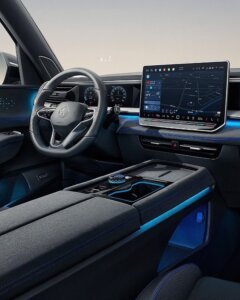
The cabin of the 2027 Volkswagen Amarok is where the vehicle makes its most convincing argument for premium pickup status. The 10.1-inch touchscreen on entry trims and the 12.0-inch portrait-oriented infotainment display from Style specification upward bring genuine modern technology to the segment. Wireless Apple CarPlay and Android Auto are standard, and the overall layout reflects Volkswagen’s passenger car design principles more than the utilitarian cabin thinking that dominated the pickup segment for decades.
The W600 adds heated 10-way Savona leather-trimmed seats with Walkinshaw embroidering, a 12.3-inch digital instrument cluster, aluminum sport pedal covers, and electric side steps — the kind of specification that blurs the line between performance vehicle and luxury dual-cab in a way that feels earned rather than gratuitous. The one notable criticism that carries over from the standard Amarok: climate controls are managed through the touchscreen rather than dedicated physical dials, which requires more visual attention than ideal when driving.
Safety Systems in the 2027 Volkswagen Amarok
The 2027 Volkswagen Amarok carries a five-star ANCAP safety rating from its 2023 assessment — a strong result for a body-on-frame pickup and a genuine differentiator from some rivals that have not achieved equivalent scores. Standard safety equipment includes autonomous emergency braking, lane-keeping assist, adaptive cruise control with stop-and-go functionality, and a rear-view camera system across all trims. The Style trim and above adds the Area View 360-degree camera system, which proves its worth not just in parking situations but in low-speed off-road maneuvering where visibility around the corners of the load bed matters considerably.
Higher trims bring blind-spot monitoring, rear cross-traffic alert, and front and rear parking sensors — a comprehensive suite that reflects Volkswagen’s commitment to bringing genuine passenger car safety technology into the pickup segment rather than treating safety as a secondary concern.
Pros and Cons of the 2027 Volkswagen Amarok
| ✅ Pros | ❌ Cons |
|---|---|
| V6 TDI delivers best-in-class torque (600Nm) for effortless towing | No electrified powertrain available in the global Amarok lineup yet |
| W600 Walkinshaw transforms on-road dynamics without compromising capability | Climate controls managed only via touchscreen — a distracting design choice |
| 5-star ANCAP safety rating — rare for a body-on-frame pickup | W600 pricing pushes into premium territory above $90,000 AUD |
| Premium interior quality comfortably exceeds the class average | Only available as a double-cab — no single or extra-cab option globally |
| 3500kg braked towing capacity maintained even on W600 | Ford Ranger platform means some powertrain components aren’t unique to VW |
| Wide engine range suits everything from fleet use to performance driving | Real-world fuel consumption of V6 TDI can reach 11L/100km under load |
2027 Volkswagen Amarok vs. The Competition
The 2027 Volkswagen Amarok operates in one of the most competitive segments in the global automotive market, and the competition has never been sharper. The Ford Ranger remains the most direct rival — sharing the Amarok’s platform, factory, and core mechanical architecture, while offering a wider body-style range (including single and extra-cab options) and a slightly more accessible entry price. In Australia, the Ranger is the country’s best-selling vehicle, which sets a formidable benchmark.
The Toyota Hilux offers unmatched long-term reliability reputation and the widest service network of any rival, making it the default choice in many remote or commercial fleet applications. The Isuzu D-Max punches hard on safety and diesel efficiency, while the Mitsubishi Triton has improved substantially with its latest generation and undercuts the Amarok on price across most trim levels.
Against the Ford Ranger Raptor specifically, the W600 Walkinshaw presents a fascinating contrast: same approximate price bracket, but the Raptor goes off-road while the W600 stays on-road. Buyers who live on sealed roads and value driver engagement will find the W600 argument compelling. Those who want to genuinely tackle rough terrain will likely prefer the Raptor’s purpose-built hardware.
Final Verdict: Is the 2027 Volkswagen Amarok Worth Buying?
The 2027 Volkswagen Amarok makes a stronger case for itself than at any previous point in the nameplate’s history, and the W600 Walkinshaw is the clearest proof of that. It takes a pickup truck that was already the most driver-focused option in its class and turns the dial several notches further — using bespoke Koni dampers, Michelin sport rubber, and a properly engineered rear anti-roll bar to deliver handling that embarrasses conventional thinking about what a dual-cab should feel like. That it does this without sacrificing towing capacity or payload is genuinely impressive engineering.
The standard 2027 Volkswagen Amarok V6 TDI lineup remains the segment’s strongest proposition for buyers who want one vehicle to serve as both capable workhorse and refined daily driver. The 600Nm of torque, the premium interior, and that five-star safety rating combine to justify the Amarok’s price premium over more basic rivals. The absence of electrification is a genuine gap — one that rivals are beginning to fill — but it doesn’t undermine what the Amarok does with combustion power.
As for the South American third-generation model arriving from the Pacheco plant: its significance lies not in what it means for buyers in Australia or Europe — it doesn’t affect them directly — but in what it signals about Volkswagen’s broader ambitions for the Amarok name. A $580 million investment in a region-specific model is not the action of a company treating the pickup segment as a footnote. The 2027 Volkswagen Amarok, in all its forms, is a nameplate with serious intent and a future that’s more interesting now than it has been in years.
Specifications, pricing, and performance data sourced from CarExpert, CarsGuide, Carsales, and Chasing Cars. W600 pricing quoted as estimated pre-production figures ahead of official August 2026 launch announcement. South American Amarok production timeline based on Volkswagen Argentina official statements.
2027 Volkswagen Amarok Images
Specifications
Specifications
| Production year | 2027 |
| Body type & seats | Double-Cab Pickup Truck, 5 Seats |
| Dimensions | Length 5,350 mm × Width 1,910 mm × Height 1,888 mm; Wheelbase 3,270 mm |
| Weight | 2,245 kg (Curb Weight) |
| Engine type | 3.0L V6 TDI Turbo Diesel Engine |
| Engine size & cylinders | 2,993 cc, V6 |
| Aspiration | Turbocharged Common-Rail Direct Injection |
| Power | 250 hp (184 kW) |
| Torque | 600 Nm |
| Transmission | 10-Speed Automatic |
| Drivetrain | 4MOTION All-Wheel Drive (AWD) |
| Acceleration (0-100 km/h) | 8.4 Seconds |
| Top speed | 180 km/h |
| Fuel type | Diesel |
| Fuel consumption | 8.5 L/100 km (Combined WLTP) |
| Fuel tank capacity | 80 Liters |
| Brakes | Ventilated Disc Brakes (Front), Disc Brakes (Rear) |
| Steering | Electric Power-Assisted Steering (EPAS) |
| Infotainment | 12.0-inch Vertical Touchscreen Infotainment System, 12.3-inch Digital Instrument Cluster, Built-in Navigation, Premium Harman Kardon Audio (Available), Voice Control |
| Connectivity | Wireless Apple CarPlay, Wireless Android Auto, Bluetooth, USB-C Ports, Wireless Smartphone Charging, Volkswagen Connected Services, Over-the-Air (OTA) Updates |
| Safety | Adaptive Cruise Control, Autonomous Emergency Braking, Lane Keeping Assist, Blind Spot Monitoring, Rear Cross Traffic Alert, Traffic Sign Recognition, Trailer Assist, 360-Degree Camera, Front and Rear Parking Sensors, Electronic Stability Control (ESC), Hill Descent Control, Driver Attention Monitor, Multiple Airbags |
2027 Volkswagen Amarok Price
 Price in USD
|
65,000 USD |
 Price in European Union
|
55,250 EUR |
 Price in United Kingdom
|
48,100 GBP |
 Price in Australia
|
99,450 AUD |
 Price in Canada
|
89,700 CAD |
 Price in India
|
5,674,500 INR |
 Price in China
|
466,700 CNY |
 Price in Indonesia
|
1,053,000,000 IDR |
 Price in Philippines
|
3,705,000 PHP |
 Price in Malaysia
|
274,300 MYR |
 Price in Nigeria
|
99,775,000 NGN |
 Price in Russia
|
5,229,900 RUB |
 Price in Pakistan
|
18,395,000 PKR |
 Price in Saudi Arabia
|
243,750 SAR |
 Price in Japan
|
9,555,000 JPY |
 Price in South Africa
|
1,146,600 ZAR |
 Price in Brazil
|
352,950 BRL |
 Price in Bangladesh
|
7,865,000 BDT |
 Price in Mexico
|
1,220,050 MXN |
More Products from Volkswagen